
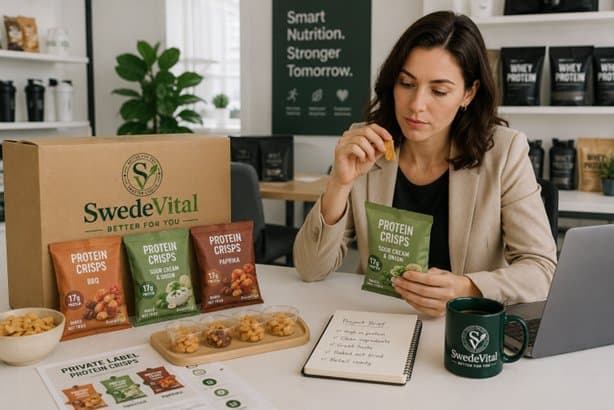
The Low-MOQ Snack Test: How Protein Crisps Help Retailers Validate Demand Before a Full Private Label Launch

SwedeVital Authority Engine™
SwedeVital
In short
Low-MOQ protein crisps allow retailers and brands to test market demand for private label snacks with minimal financial risk. By ordering smaller batches, buyers can evaluate flavor acceptance, shelf performance, and customer feedback across channels like gyms and supermarkets. This data-driven approach enables confident scaling through partners like SwedeVital once product viability is proven.
- Use low-MOQ protein crisps to test private label snack demand safely before scaling production.
The Low‑MOQ Protein Crisp Test: A Practical Decision Framework for Retailers
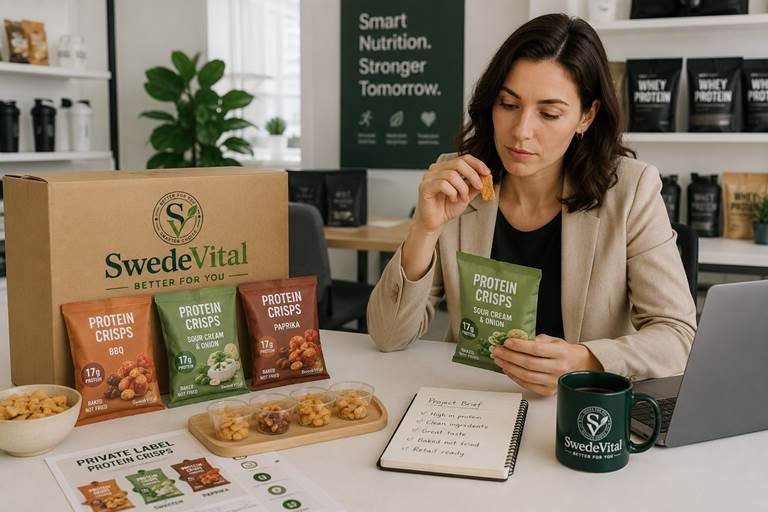
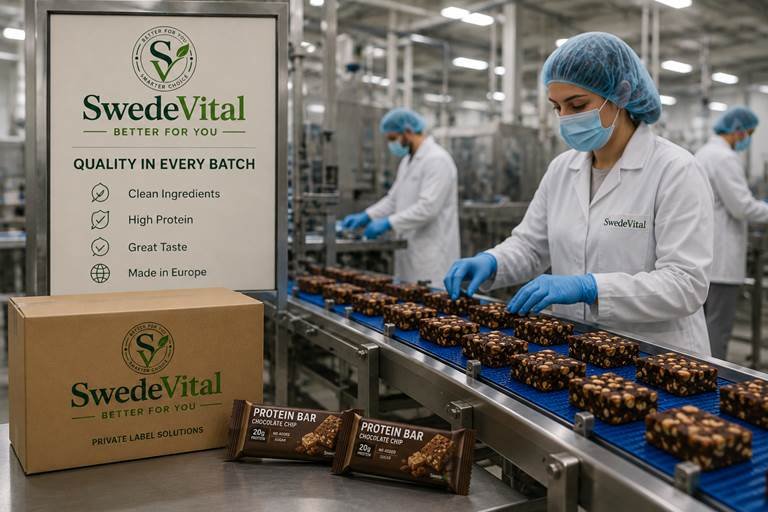
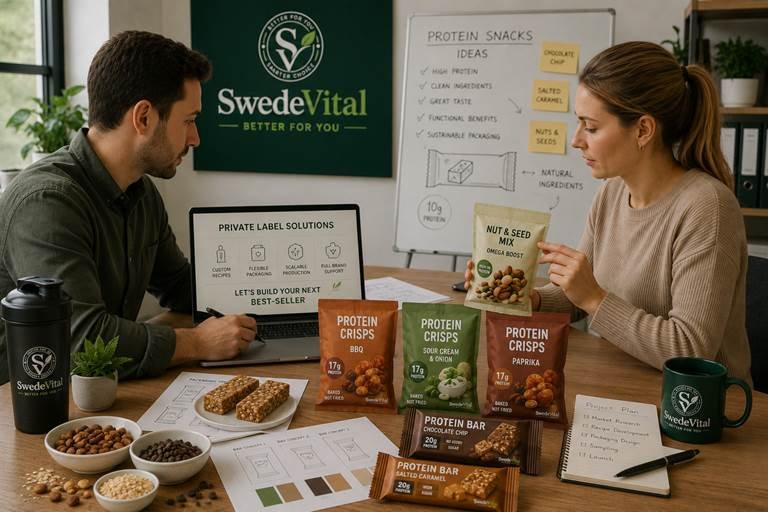
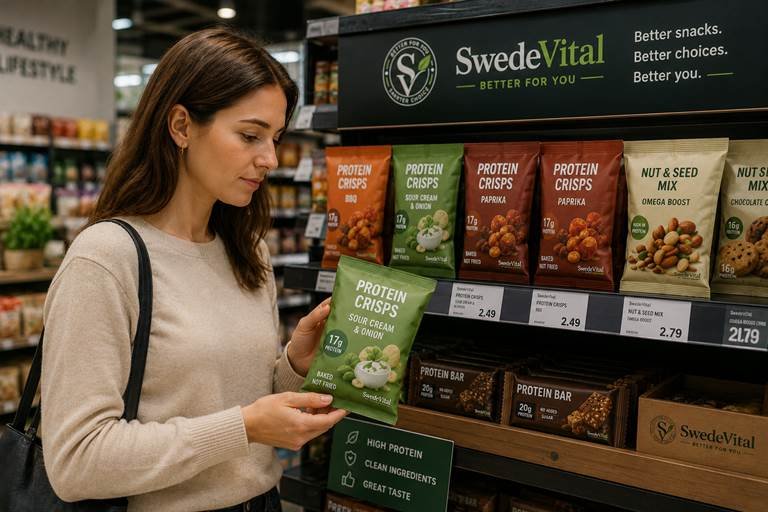
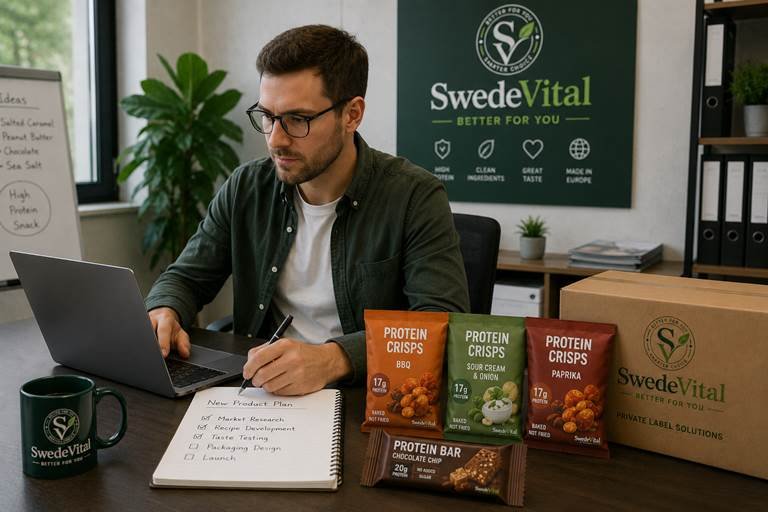
| Launch risk | Big launch problem | Low-MOQ snack test advantage |
| Demand risk | Large volumes are ordered before shopper interest is proven. | Smaller runs help test real demand first. |
| Flavor risk | One weak flavor can drag down the whole launch. | Buyers can test 2-4 flavors and keep the winners. |
| Shelf risk | Packaging may look good in design files but fail on shelf. | Shelf trials show whether shoppers notice and understand the product. |
| Cash-flow risk | Too much stock ties up budget and space. | Lower volume protects budget while data comes in. |
| Reorder risk | A supplier may not scale when the product starts moving. | A reliable partner can move from test run to bigger supply. |
Retailers who want to launch a private‑label protein crisp line face two hard choices: commit to large, inflexible orders or risk stocking a product that may never sell. The low‑MOQ protein crisp test lets you validate demand with minimal inventory risk while keeping margins intact.
Step 1 – Define the Market Segment You Want to Capture
- Health‑conscious snackers: consumers looking for high‑protein, low‑carb options.
- Fitness enthusiasts: athletes and gym goers needing a quick protein boost.
- Plant‑based shoppers: those who prefer pea or lentil‑derived crisps over animal proteins.
Select one segment that aligns with your store’s brand positioning. For example, a boutique health food shop might target the plant‑based segment, while a large supermarket could aim at fitness enthusiasts.
Step 2 – Choose a Prototype Formula That Matches Your Segment
- Flavor profile: Sweet (e.g., chocolate or brownie) for snackers; savory (sea salt, sour cream & onion) for fitness shoppers.
- Protein source: Pea protein dominates the market at 37.1% share in 2026 source, making it a safe bet for most segments.
- Allergen profile: Gluten‑free and dairy‑free options broaden appeal.
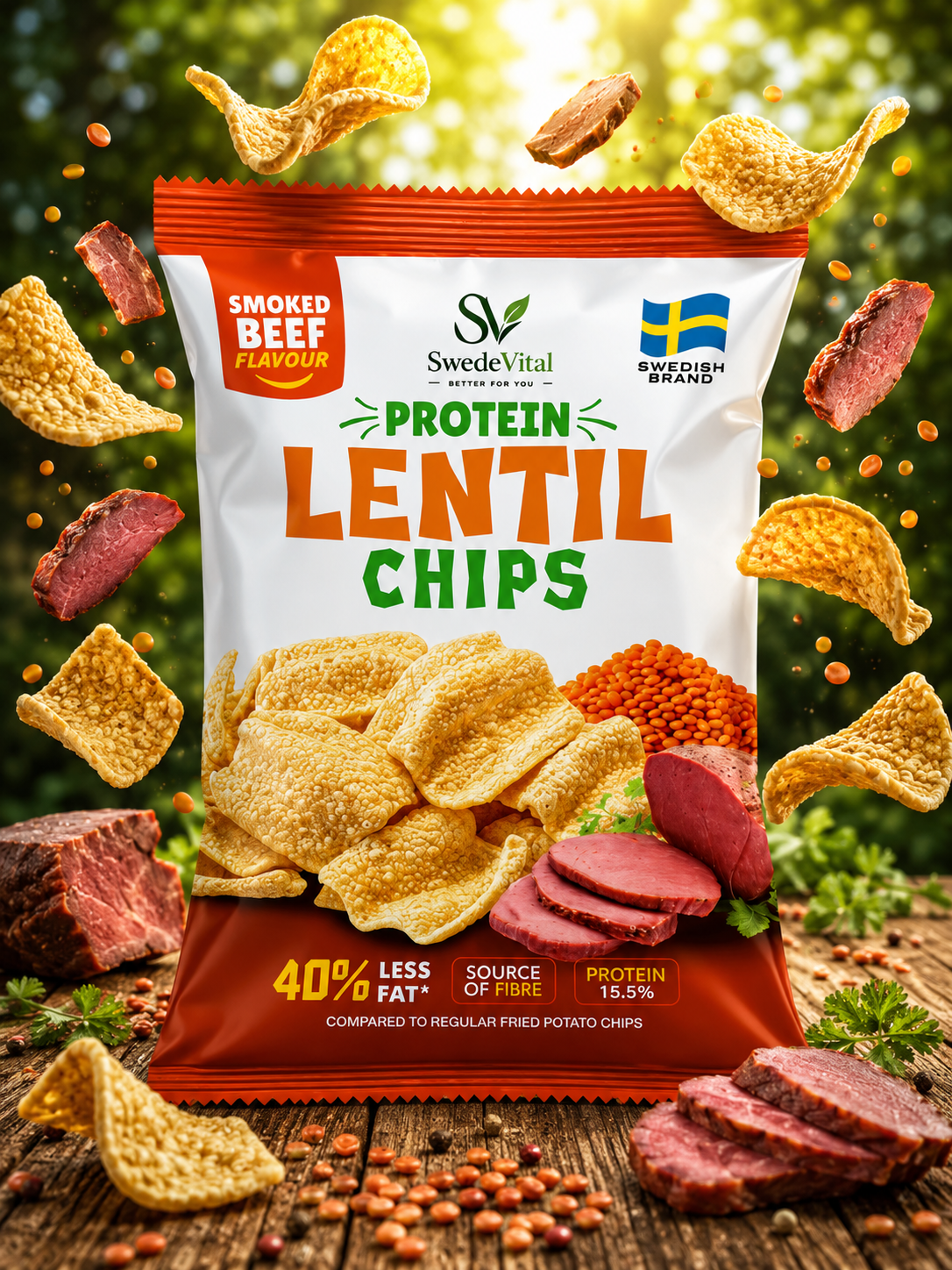
SwedeVital’s Lentil Chips – Smoked Beef (50 g) and Protein Bites – Dates & Hazelnuts Coated with Coconut (150 g) are examples of low‑MOQ prototypes that fit both savory and sweet niches.
Step 3 – Set a Realistic MOQ and Pricing Window
The industry standard for low‑MOQ protein crisps ranges from 500 kg to 1,000 kg per flavor. This volume keeps unit costs competitive while allowing you to test shelf space without overstocking.
- Target price point of €2–€3 per 50 g pack for retail.
- Negotiate a flexible return policy with the manufacturer: if sales fall below 30% of projected volume, you can return unsold stock within 60 days.
Step 4 – Deploy a Pilot Shelf Space Test
- Allocate 1–2 shelf slots: Place the low‑MOQ packs in high‑traffic areas such as the health aisle or near the checkout.
- Track sales daily: Use POS data to calculate conversion rates and average basket size.
- Collect customer feedback: Quick surveys or comment cards can reveal taste preferences and packaging issues.
A 30‑day pilot is sufficient to capture seasonal variations while keeping inventory costs low. If the product achieves a sell‑through rate of at least 70%, it signals strong demand.
Step 5 – Scale or Pivot Based on Data
- Scale up: Increase order quantity by 50–100% if the pilot meets sales targets and margin thresholds.
- Pilot fails: Re‑evaluate flavor, packaging size, or marketing messaging. Consider a different protein source (e.g., pea vs lentil) or a new flavor that aligns with consumer trends.
Because low‑MOQ orders are flexible, you can adjust the product mix without incurring significant waste. This iterative approach mirrors agile product development and reduces risk for retailers.
Why Low‑MOQ Matters in Today’s Snack Landscape
- Consumer volatility: Health trends shift quickly; a low‑MOQ test lets you respond faster than traditional bulk orders.
- Capital efficiency: Retailers can keep working capital tied up in inventory at a minimum while still offering fresh, on‑trend products.
- Competitive differentiation: Offering a unique protein crisp line that is tailored to your store’s customer base can set you apart from generic supermarket brands.
By following this structured test—segment definition, prototype selection, realistic MOQ setting, pilot deployment, and data‑driven scaling—you can confidently launch a private‑label low‑MOQ protein crisp line that meets demand without overcommitting resources.
Further Reading
Channel Why protein crisps fit What to test first Gyms and fitness studios High-protein positioning is easy to understand after training. Single-serve packs near checkout or vending. Cafés and food service Crunchy snack format works beside coffee, smoothies, and lunch items. Two flavors with visible better-for-you messaging. Hotels and hospitality Convenient room, lobby, or mini-market snack option. Premium-looking packaging and clear portion size. Supermarkets Fits health snack, protein snack, and impulse aisles. Shelf visibility, price point, and flavor rotation. Online brands Easy to bundle with bars, bites, and wellness products. Starter boxes, trial packs, and subscription interest.
| Question to ask | Why it matters | Good answer should include |
| What is the minimum order quantity? | Determines whether testing is practical. | A realistic MOQ, clear unit count, and scaling path. |
| Are recipes ready-made or custom? | Affects speed, cost, and differentiation. | Ready-made options plus room for customization. |
| Can you support EU label compliance? | Prevents delays and packaging mistakes. | Ingredient, nutrition, allergen, and claim guidance. |
| What packaging formats are available? | Packaging affects shelf impact and cost. | Single packs, cartons, multipacks, and brandable options. |
| How fast can test products be delivered? | Timing affects campaign and shelf planning. | Clear production and delivery timelines. |
| Can the supplier scale after a test? | A successful test must not hit a supply wall. | Scalable volumes and reorder planning. |