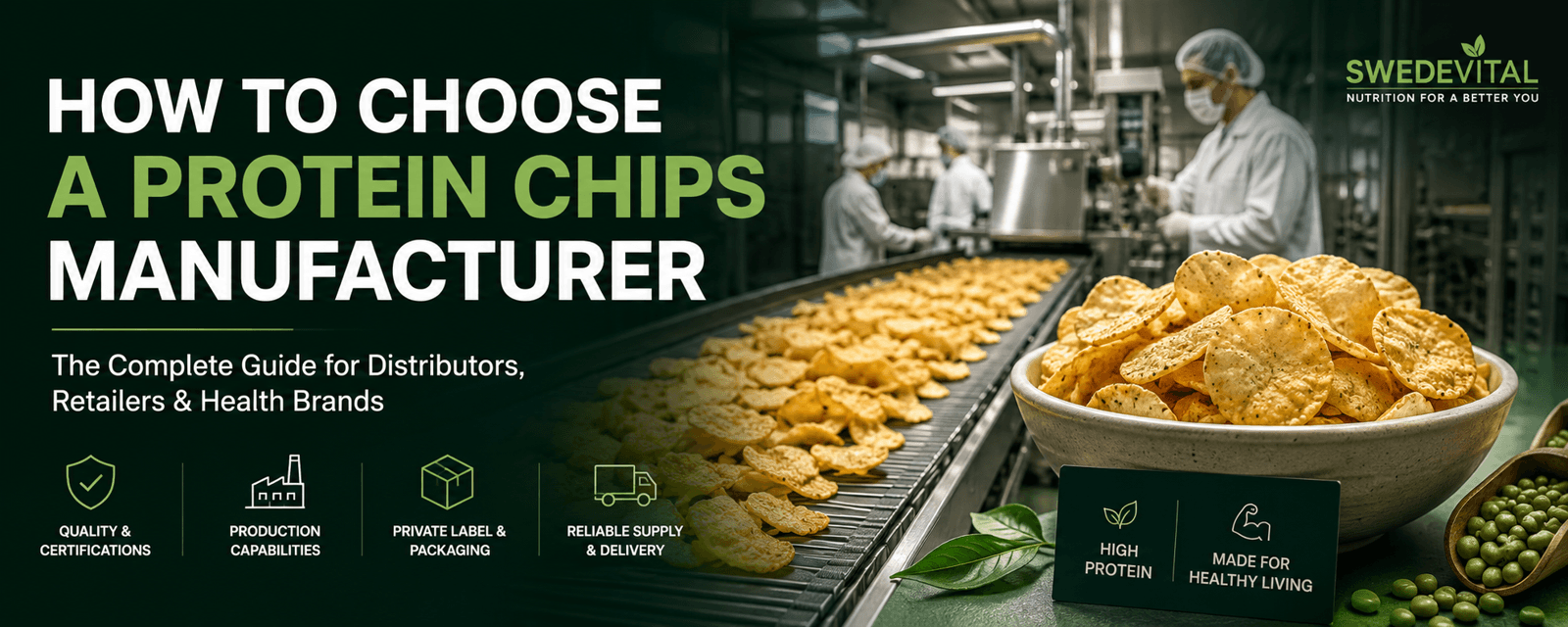
How to Choose a Protein Chips Manufacturer

SwedeVital Authority Engine™
SwedeVital
In short
To choose a protein chips manufacturer, assess their experience with high‑protein products, production capacity, ISO/HACCP certifications, sustainability practices, and cost structure including MOQ and lead times.
- Pick a protein chips manufacturer by evaluating expertise, quality assurance, compliance, sustainability, and pricing factors.
Choosing a Protein Chips Manufacturer: A Practical Decision Framework
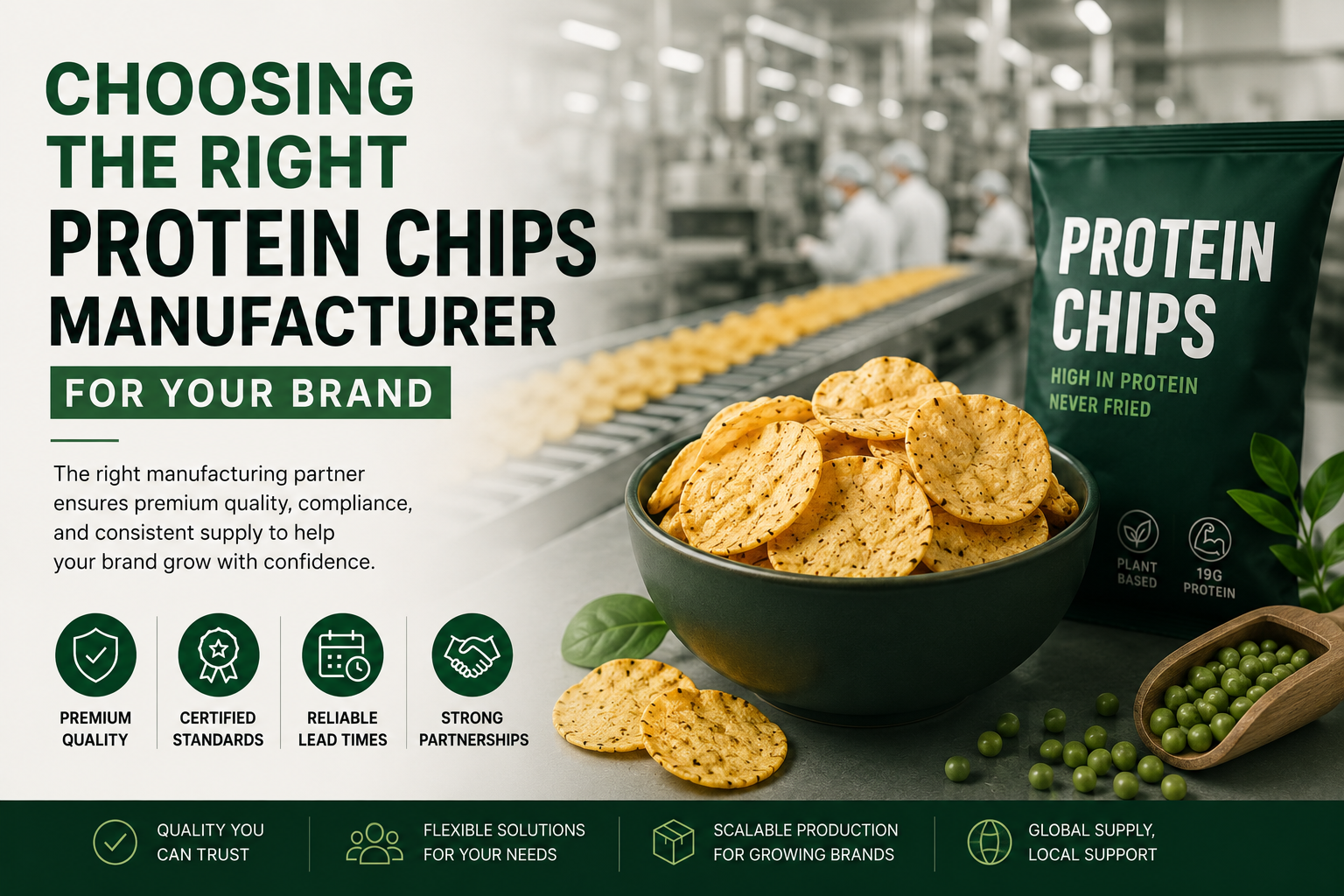
The protein‑chip market is expanding faster than most snack categories, driven by rising demand for high‑protein, low‑carb options and the growing popularity of plant‑based ingredients. For brands looking to launch or expand a private‑label line, selecting the right manufacturer can make the difference between a successful product and a costly misstep.
1. Define Your Product Profile Early
Before you even start searching for manufacturers, answer these three questions:
- Flavor & Texture Goals: Do you want a crispy, baked chip or a chewy, tortilla‑style snack? The manufacturing process differs significantly between baking and extrusion.
- Protein Source: Will the protein come from whey, soy, pea, lentil, or a blend? Each source has distinct processing requirements and cost implications.
- Regulatory & Label Claims: Are you targeting “high‑protein” (≥18 g per serving) or “low‑carb” (<5 g net carbs)? Some manufacturers specialize in meeting specific nutrition claims.
Having a clear product brief allows you to filter manufacturers that can meet your exact specifications.
2. Evaluate Technical Capabilities and Innovation Capacity
- Process Flexibility: Can the manufacturer handle both baked and extruded formats? YouBar Manufacturing offers co‑manufacturing for a range of protein crisps.
- Ingredient Integration: Look for partners that have experience adding functional ingredients—fiber, probiotics, or vitamins—without compromising crunch. Laboratoire PYC emphasizes taste while incorporating high‑protein content.
- R&D Support: A manufacturer with an in‑house innovation center can help refine flavor profiles and texture. The Keychain.com profile of Ravensbergen Food B.V. highlights their custom snack development services.
3. Assess Quality Assurance & Compliance Track Record
Protein chips often carry health‑related claims, so strict quality control is essential. Verify that the manufacturer:
- Maintains ISO 22000 or equivalent food safety certification.
- Has a documented traceability system for all ingredients.
- Can provide third‑party lab results for protein content and allergen testing.
While not every supplier will list certifications publicly, ask for evidence during the due‑diligence phase. A reputable partner will be transparent about their compliance processes.
4. Compare Cost Structures Transparently
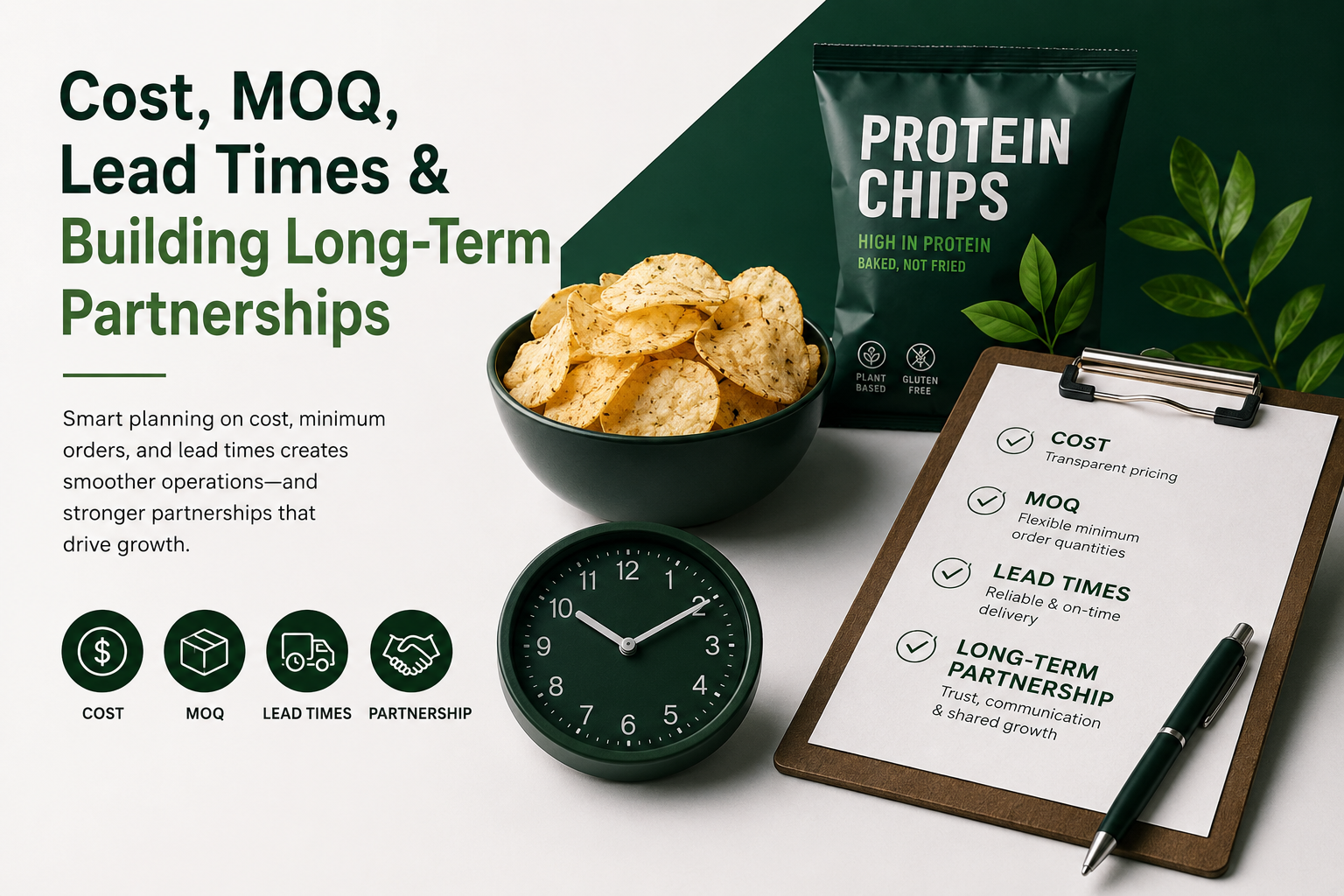
Cost is rarely a single number; it includes raw materials, processing, packaging, and logistics. Use a standardized cost sheet that captures:
- Raw Material Sourcing: Some manufacturers source protein isolates locally, which can reduce import duties.
- Batch Size & Minimum Order Quantity (MOQ): Smaller MOQs are advantageous for startups but may increase per‑unit costs.
- Packaging Options: Custom resealable pouches versus standard bags affect both cost and shelf life.
- Logistics Fees: Shipping to your target markets can vary widely; ask for a freight quote based on your distribution plan.
Request a detailed quotation that breaks down each component so you can compare apples to apples across candidates.
5. Pilot Production & Sensory Evaluation
A short‑run pilot is the most reliable way to validate a manufacturer’s ability to deliver on your specifications. During this phase:
- Order a small batch (e.g., 500–1,000 units) in each intended flavor.
- Conduct blind taste tests with a focus group that represents your target demographic.
- Measure key attributes—crispness, protein bite, aftertaste—and compare them to your product brief.
If the pilot meets expectations, you can proceed to full‑scale production with confidence.
6. Build a Long‑Term Partnership Mindset
Choosing a manufacturer is not just about the first order; it’s about scaling together. Consider:
- Scalability Plans: Can they ramp up production as demand grows?
- Supply Chain Resilience: Do they have multiple ingredient suppliers to mitigate shortages?
- Communication Channels: Regular status updates and a dedicated account manager reduce turnaround times.
A strong partnership can accelerate time‑to‑market for new flavors and help navigate regulatory changes.
Frequently asked questions
What should I look for in a protein chips manufacturer’s quality assurance?+
Check for ISO certifications, HACCP compliance, and third‑party lab testing that verify protein content, allergen control, and microbiological safety.
How important is sustainability when choosing a protein chips manufacturer?+
Very important – look for sustainable sourcing, waste reduction, energy efficiency, and eco‑friendly packaging to appeal to conscious consumers.
What does MOQ mean and why does it matter?+
MOQ is the minimum order quantity. Lower MOQs allow new brands to test markets with less risk but may increase per‑unit costs; balance this against your budget and scale.
See the full SwedeVital range
Every line, every format, and what it takes to stock them — sent to you now, before we open for orders on 1 January 2027.
Written by
SwedeVital Authority Engine™
Last updated
2 August 2026