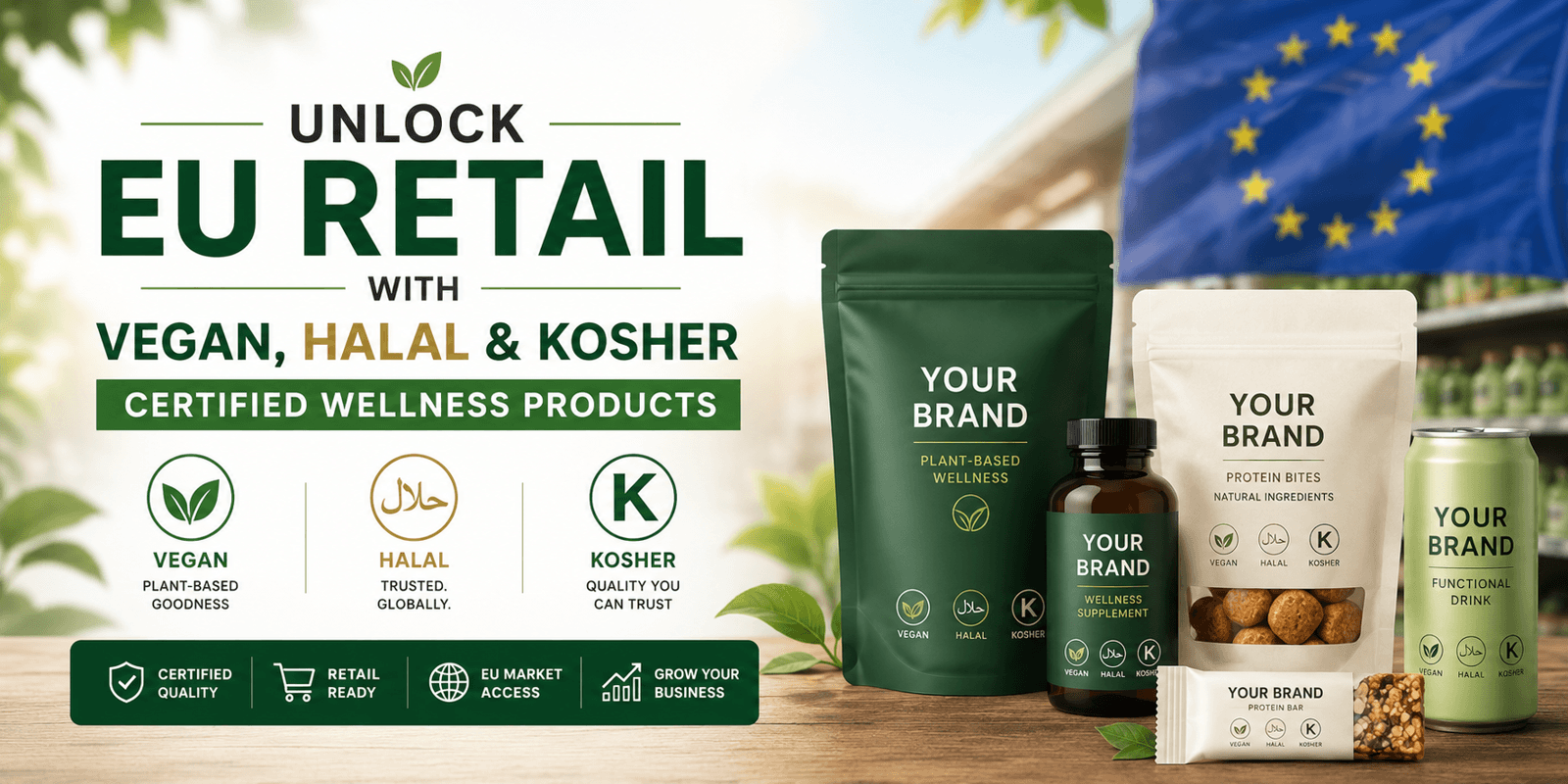
Vegan Halal Kosher Certified Wellness Products: Why Multi-Certification Matters for Retail Success
SwedeVital Authority Engine™
SwedeVital
In short
Triple certification (vegan, halal, kosher) is a strategic imperative for European retail, as it guarantees ingredient purity, eliminates animal-derived allergens like gelatin, and appeals to multiple demographic groups simultaneously. This approach reduces supply chain complexity for retailers while meeting the growing demand for inclusive, ethically sound wellness products across EU and MENA mar
- Triple certification (vegan, halal, kosher) is a strategic imperative for European retail, as it guarantees ingredient purity, eliminates animal-derived allergens like gelatin, and appeals to multiple demographic groups simultaneously.
The Strategic Imperative of Multi-Certification in Modern Wellness
In the highly competitive landscape of European retail, the barrier to entry is no longer just about product quality; it is about trust and accessibility. For brands looking to penetrate diverse markets, obtaining a vegan halal kosher certified wellness status has evolved from a niche religious compliance issue into a powerful commercial strategy. These certifications are no longer exclusively required for religious or ethical criteria but are now a guarantee for more attentive consumers who prioritize transparency, safety, and inclusivity in their purchasing decisions (source: EPO S.r.l.). When a single product carries the triple assurance of being vegan, halal, and kosher, it signals to retailers that the item is free from common allergens like gelatin, alcohol, and animal-derived fats, thereby broadening its potential customer base significantly.
This convergence of certifications creates a unique opportunity for B2B suppliers and private label brands. The acronym VHK – standing for “VEGAN”, “HALAL” and “KOSHER” – has become a global symbol for products that are strictly adhered to these rigorous standards (source: Vegan-Halal-Kosher). For retail buyers, stocking products with this triple certification reduces the complexity of supply chain management. Instead of managing separate SKUs for different demographic groups, retailers can offer one inclusive product that appeals to Muslim consumers, Jewish consumers, vegans, vegetarians, and health-conscious omnivores simultaneously. This efficiency is particularly valuable in the wellness sector, where shelf space is premium and consumer loyalty is driven by clear, verifiable values.
Furthermore, the definition of "wellness" itself is expanding beyond mere physical health to include ethical consumption. As we look toward 2026, consumers are demanding smarter, science-led solutions that fit busy lives without compromising on health goals or ethical standards (source: DR.VEGAN). A product that is certified vegan ensures no animal exploitation, while halal and kosher certifications ensure strict adherence to religious dietary laws regarding slaughter methods and ingredient purity. This overlap creates a robust foundation for brand trust, allowing companies to position their wellness products as premium, inclusive, and ethically sound choices for the modern European shopper.
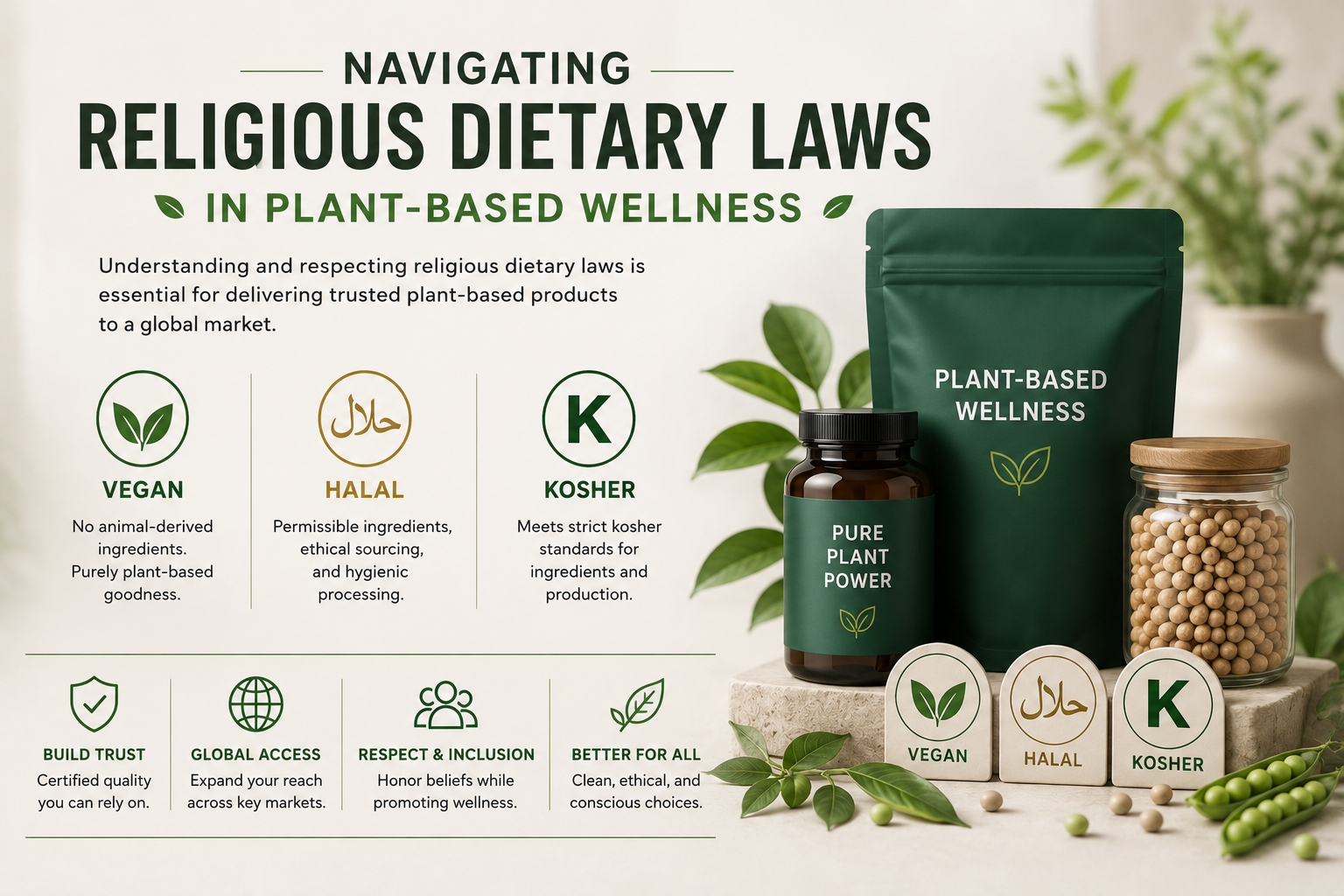
Navigating Religious Dietary Laws in Plant-Based Wellness

Understanding the intersection of veganism and religious dietary laws is critical for manufacturers targeting the EU market. While veganism excludes all animal products, halal and kosher laws have specific nuances regarding processing aids and cross-contamination. For instance, vegetarian foods are generally considered kosher as they do not contain non-kosher ingredients such as pork or shellfish, provided they are prepared under strict supervision (source: Halalification). However, the mere absence of animal products does not automatically make a product halal; the source of ingredients like glycerin or emulsifiers must also be verified to ensure they are not derived from prohibited sources.
This complexity is why many top-tier supplement manufacturers choose to produce in facilities that hold all three certifications simultaneously. By manufacturing in a Kosher, Halal, vegan, organic, and non-GMO certified facility, brands can guarantee purity across the board (source: Wendy Di Angelis / Live Got You). This approach eliminates the risk of cross-contamination with non-compliant ingredients during production. For example, in the category of Supplements, ingredients like magnesium glycinate or probiotics often use capsule shells made from gelatin (animal-derived). A vegan-certified facility uses plant-based capsules, which automatically satisfies the kosher and halal requirements regarding animal derivatives, simplifying the certification process for retailers.
The MENA region, a key export market for European wellness products, shows a growing demand for these compliant goods. The MENA Halal Food Market is expanding rapidly, with significant growth projected in vegan products alongside traditional dairy and meat categories (source: Coherent Market Insights). By securing vegan halal kosher certified wellness credentials, European suppliers can seamlessly enter these high-growth markets. The certification acts as a passport, allowing products to move freely across borders where religious compliance is a non-negotiable requirement for retail acceptance.
The Role of Certification in Building Retailer Confidence
For retail buyers, the decision to stock a new wellness product is heavily influenced by the perceived risk. A vegan halal kosher certified wellness label mitigates this risk by providing third-party verification of ingredient integrity. In an era where consumers are increasingly skeptical of marketing claims, these certifications offer tangible proof of compliance. This is particularly relevant in the Pâtes à tartiner and spread categories, where ingredients like gelatin or alcohol-based flavorings can be hidden in complex formulations. A product that is certified vegan ensures no animal gelatin is used, while halal certification ensures no alcohol is present, making it safe for a vast demographic.
Consider the example of Nutella-style spreads. While traditional recipes may not align with strict religious diets, innovative manufacturers are reformulating products to meet these demands. By utilizing plant-based emulsifiers and ensuring all cocoa and nut sources are certified halal and kosher, brands can create inclusive alternatives that do not compromise on taste. This innovation is crucial for retailers looking to diversify their offerings. As noted in industry analyses, understanding the nuances of meat and food certifications helps brands navigate the complex web of organic, grass-fed, kosher, and halal requirements (source: Mamavation). This level of detail reassures buyers that the product will not face backlash or legal issues in diverse markets.
Moreover, certification facilitates easier onboarding into major European retail chains. Many large supermarkets have dedicated sections for halal and kosher products, but they also increasingly promote "free-from" aisles that overlap with vegan certifications. A product that holds all three labels can be placed in multiple categories, increasing its visibility and sales potential. This strategic positioning is essential for brands aiming to scale quickly. By leveraging these certifications, suppliers can demonstrate to retailers that their products are not just compliant, but are aligned with broader trends of ethical consumption and health consciousness.
Product Categories Leading the Certification Wave
Certain wellness categories are naturally predisposed to benefit from multi-certification strategies. Supplements, for instance, are a prime candidate. Products like Ashwagandha KSM-66 or Vitamin D3 often use fillers and binders that can be problematic for strict dietary laws. By ensuring these supplements are manufactured in a facility certified for vegan, halal, and kosher standards, brands can appeal to the global wellness market. The Supplements category is particularly sensitive to purity issues, as consumers expect high-grade ingredients without contamination. A triple certification provides that assurance.
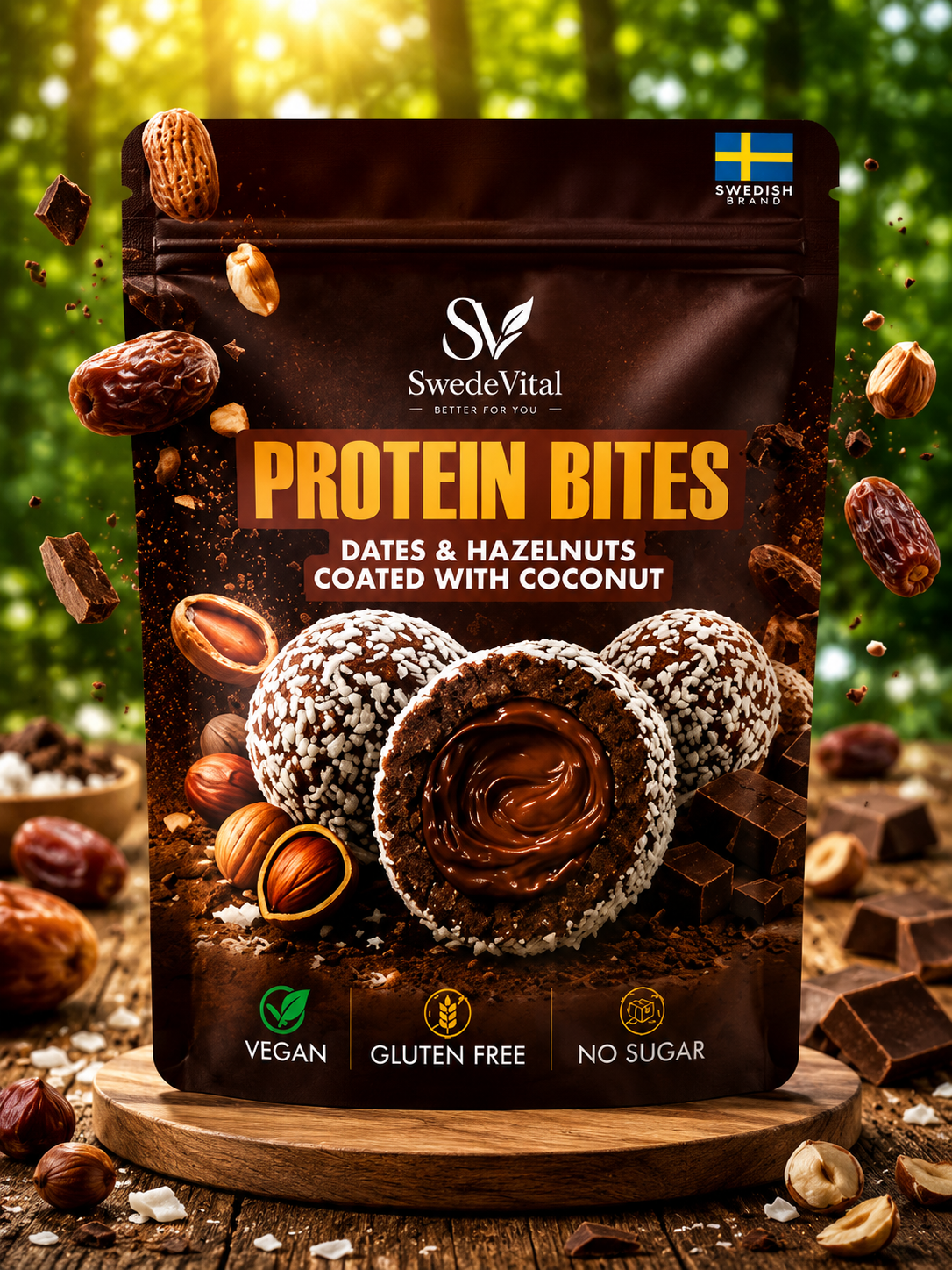
In the realm of functional foods, protein-rich snacks and spreads are also seeing a surge in demand for certified options. Retailers are looking for products that can serve multiple occasions, from fitness recovery to healthy snacking. For brands interested in exploring this space, understanding how to build a shelf that feels imported and interesting is key (source: European Snacks for Retail). Similarly, those looking to launch private label lines can benefit from the insights on creating high-protein snack products without guessing (source: Private Label Snacks). These resources highlight how certification can be a differentiator in crowded markets.
The trend extends to specialized items like Omega-3 Fish Oil, where traditional sourcing conflicts with vegan and kosher requirements. However, algae-based Omega-3s offer a solution that is naturally vegan and can be certified halal and kosher. This innovation allows brands to tap into the heart health market without alienating religious or ethical consumers. By focusing on these high-potential categories, suppliers can create a portfolio of products that are not only compliant but also innovative and forward-thinking.
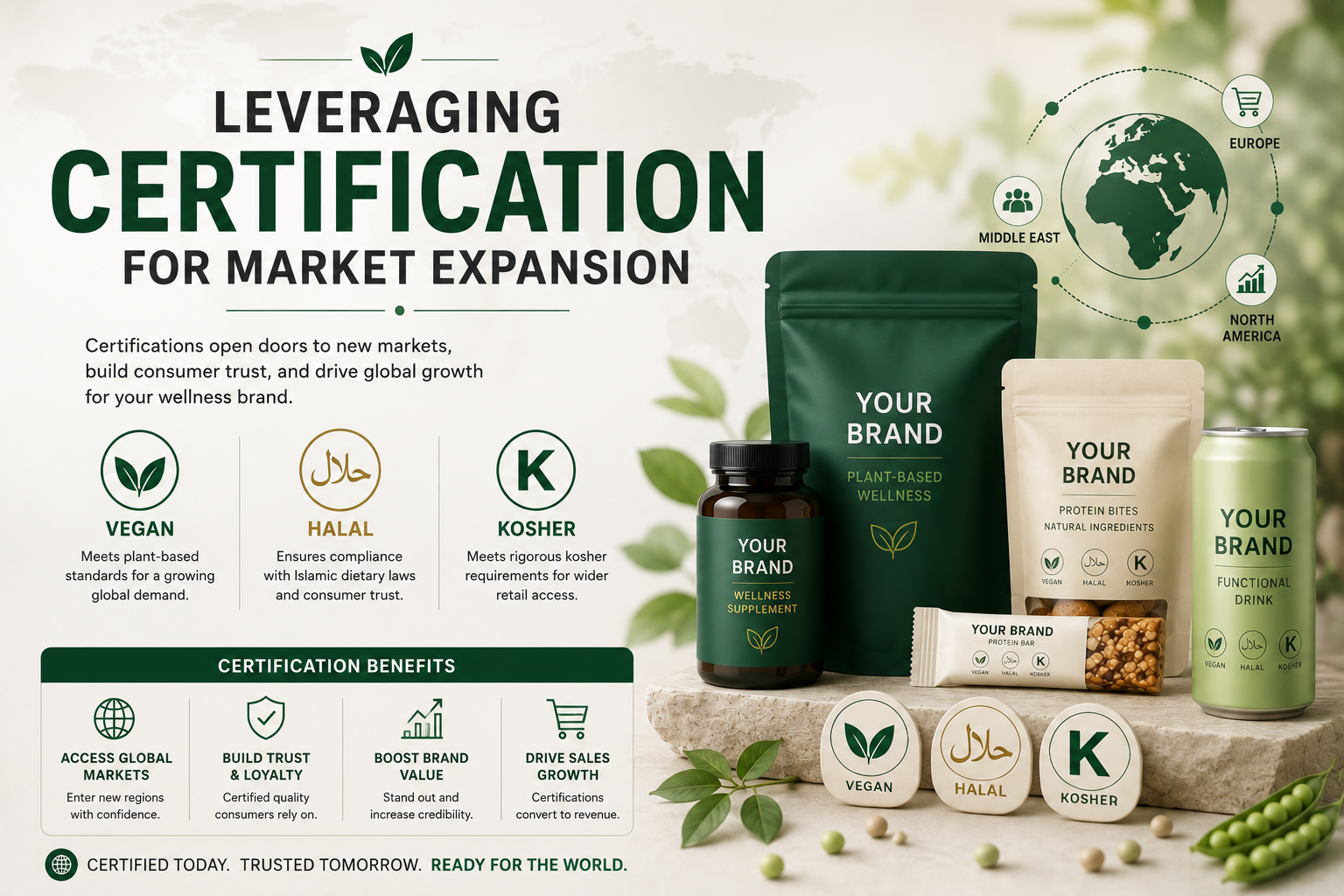
Leveraging Certification for Market Expansion

Expanding into new markets requires more than just translation; it requires cultural and religious compliance. A vegan halal kosher certified wellness product is inherently more adaptable to different regions. For example, in the Middle East, halal certification is mandatory for market entry. In Israel, kosher certification is required. By obtaining both, along with vegan certification, a single product can be sold across these diverse regions without reformulation. This efficiency reduces costs and time-to-market for B2B suppliers.
Additionally, the growing popularity of veganism in Europe, as predicted for 2026, means that more consumers are seeking out certified products (source: Vegan 2026 Trend Report). These consumers are
Sources
- MENA Halal Food Market Trends, Share and Forecast, 2026-2033
- Organic Acerola Cherry Powder, 8 Pounds — Non-GMO, Raw, Vegan, Kosher — by Food to Live - Walmart.com
Related reading
Frequently asked questions
Why is triple certification important for EU retail?+
Triple certification (vegan, halal, kosher) builds trust by guaranteeing no animal derivatives or alcohol are present, appealing to Muslim, Jewish, vegan, and health-conscious consumers simultaneously while simplifying retailer inventory.
How do vegan halal kosher certifications benefit B2B suppliers?+
They allow suppliers to offer one inclusive SKU that meets diverse religious and ethical standards, reducing supply chain complexity and opening access to high-growth markets like the MENA region.
What is the VHK acronym in wellness products?+
VHK stands for Vegan, Halal, and Kosher, representing a global symbol for products that strictly adhere to rigorous ethical and religious dietary standards.
Be first to stock SwedeVital
Join the waiting list for priority partner onboarding, the full catalogue and launch pricing — before anyone else.
Written by
SwedeVital Authority Engine™
Last updated
14 July 2026