Lion's Mane Manufacturer Europe: A Complete Buyer's Guide

SwedeVital Authority Engine™
SwedeVital
In short
A European lion’s mane manufacturer offers ISO 9001, ISO 22000, HACCP and cGMP certified production, climate‑controlled cultivation yielding high beta‑glucan content, and full EU compliance for rapid market entry.
- Europe’s certified lion’s mane manufacturers deliver high‑quality, compliant supplements with scalable production and transparent supply chains.
Choosing a Lion’s Mane Manufacturer in Europe: A Practical Decision Framework
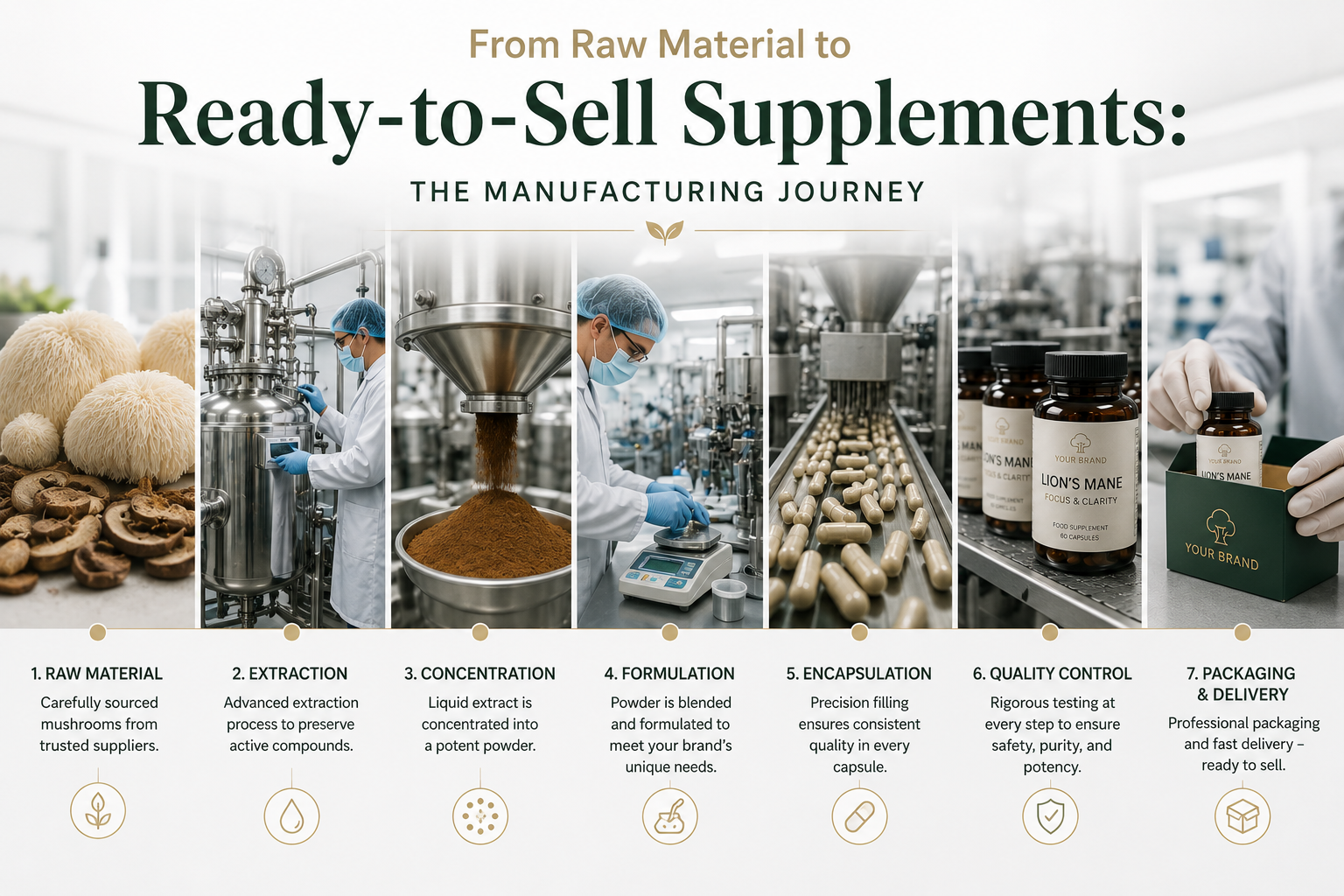
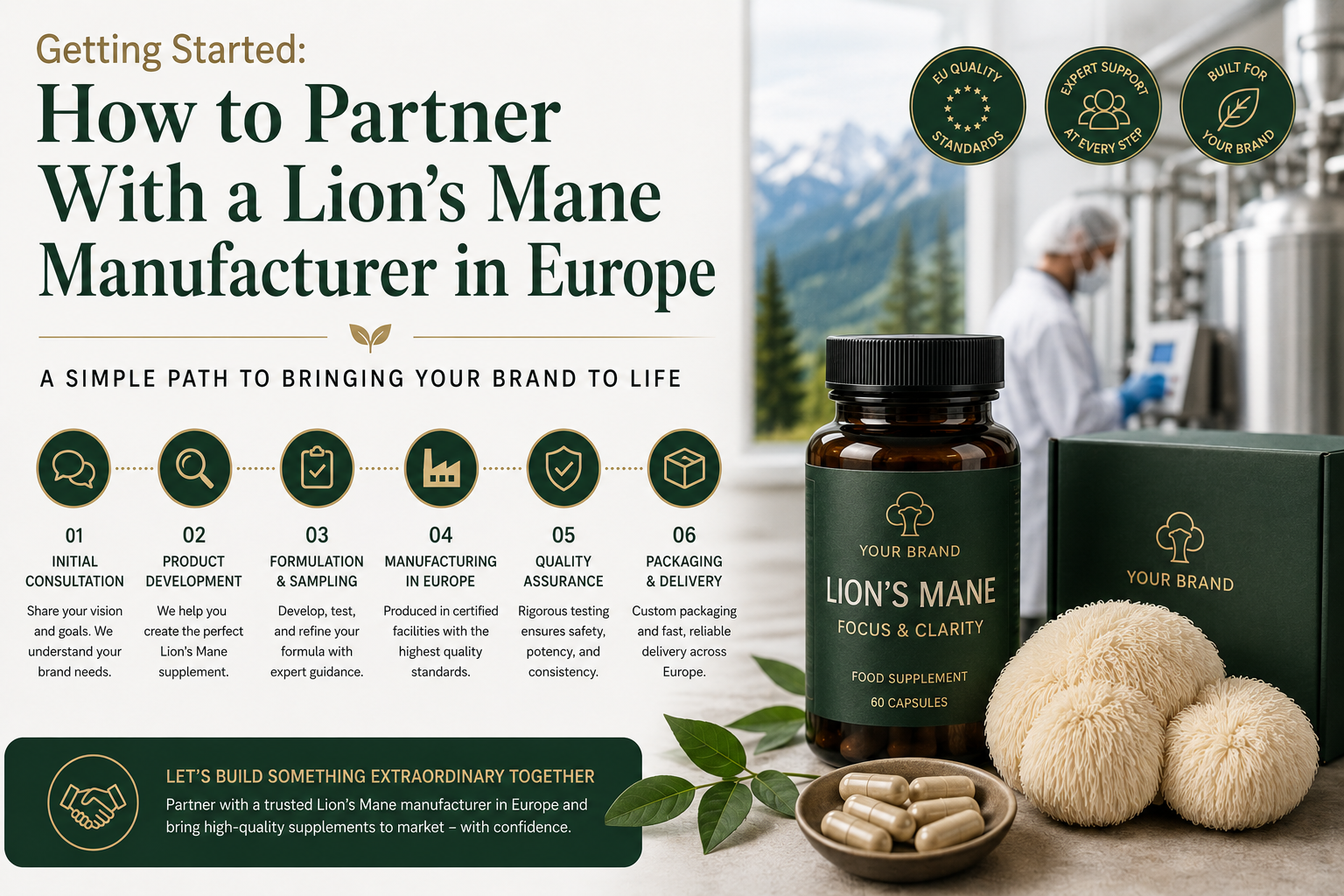
The functional‑mushroom boom has turned Lion’s Mane (Hericium erinaceus) into a staple ingredient for nootropic, immune‑support, and vegan supplement lines. Yet the market is crowded with suppliers that differ in cultivation methods, extraction technology, regulatory compliance, and supply‑chain transparency. For brands looking to launch or expand a private‑label product, the key question isn’t “who can make Lion’s Mane?” but “which manufacturer aligns with my quality standards, cost structure, and brand narrative?”
1. Define Your Product Vision Early
Before you even start talking to suppliers, answer these three questions:
- Formulation goal. Are you targeting a high‑potency extract (≥ 10 % β‑glucans), a whole‑fruiting‑body powder for smoothies, or a functional gummy that blends Lion’s Mane with other adaptogens?
- Regulatory positioning. Do you need EU EKO certification, GMP compliance, or a specific claim‑support dossier (e.g., “supports cognitive function” vs. “immune support”)?
- Supply‑chain ethos. Is sustainability (closed‑loop cultivation, renewable energy) a core brand promise that must be reflected in the supplier’s operations?
These answers narrow the field from dozens of manufacturers to a handful that can realistically meet your specifications.
2. Evaluate Cultivation & Extraction Technology
Lion’s Mane quality hinges on two critical stages: growing the mushroom and extracting its bioactive compounds. Look for:
- Controlled environment cultivation. Europe‑based suppliers such as Mushroom Empire grow in climate‑controlled halls in Poland, ensuring consistent β‑glucan levels and minimal contamination. Their EU EKO certification signals adherence to organic standards.
- Advanced extraction methods. Proprietary glycerosome or supercritical CO₂ extractions preserve heat‑labile compounds like hericenones and erinacines. Verify that the supplier can provide a detailed extraction protocol and batch‑to‑batch consistency data.
For example, Mushroom Empire claims to use glycerosome technology, which encapsulates active molecules in lipid vesicles for improved bioavailability. If your product promises superior absorption, this is a decisive advantage.
3. Scrutinize Quality Assurance & Traceability
A robust QA program should include:
- Third‑party lab testing. Certificates of analysis (COA) for each batch covering β‑glucan content, mycelial contamination, heavy metals, and pesticide residues.
- Batch traceability. Digital records that link raw material lots to finished product batches, enabling rapid recalls if necessary.
- GMP or ISO certification. While not mandatory for all markets, these certifications reassure retailers and consumers of consistent manufacturing standards.
Ask suppliers for recent audit reports and sample COAs. A transparent QA process reduces risk and speeds time‑to‑market.
4. Assess Packaging & Sustainability Credentials
European manufacturers often offer eco‑friendly packaging options—recyclable PET, biodegradable paper, or refillable glass jars. If your brand emphasizes sustainability, request:
- Carbon footprint data. Some suppliers publish lifecycle assessments that quantify CO₂ emissions per kilogram of product.
- Renewable energy usage. Facilities powered by solar or wind reduce indirect environmental impact.
These details can become powerful marketing points, especially for health‑conscious consumers who value transparency.
5. Compare Lead Times, MOQ, and Pricing Flexibility
The functional‑mushroom market is highly seasonal; supply disruptions can occur if demand spikes unexpectedly. Evaluate each supplier on:
- Minimum order quantity (MOQ). A high MOQ may be prohibitive for startups or niche brands.
- Lead time. From raw material procurement to finished product shipment, realistic timelines should align with your launch calendar.
- Pricing tiers. Look for volume‑based discounts and the ability to negotiate on packaging or co‑branding services.
For instance, NutriPartners offers a flexible MOQ for plant extracts, making it suitable for smaller brands that need to test market response before scaling.
6. Verify Regulatory Compliance & Claim Support
In the EU, health‑claim regulations are stringent. Ensure your chosen manufacturer can provide:
- Scientific evidence. Peer‑reviewed studies or clinical trials
Frequently asked questions
What certifications do European lion’s mane manufacturers hold?+
They typically have ISO 9001, ISO 22000, HACCP and cGMP certificates ensuring quality, safety and regulatory compliance.
How does climate‑controlled cultivation benefit product potency?+
It allows precise temperature, humidity and substrate control, resulting in higher beta‑glucan concentrations for stronger cognitive benefits.
Can I customize the flavor or packaging of my lion’s mane supplements?+
Yes—most manufacturers offer customization options for dosage, format, flavor profiles, labeling and packaging to match your brand identity.
What is the typical time‑to‑market when partnering with a European manufacturer?+
With established EU supply chains and regulatory clarity, brands can launch products in under six months, as demonstrated by SwedeVital’s gummy line.
See the full SwedeVital range
Every line, every format, and what it takes to stock them — sent to you now, before we open for orders on 1 January 2027.
Written by
SwedeVital Authority Engine™
Last updated
2 August 2026