
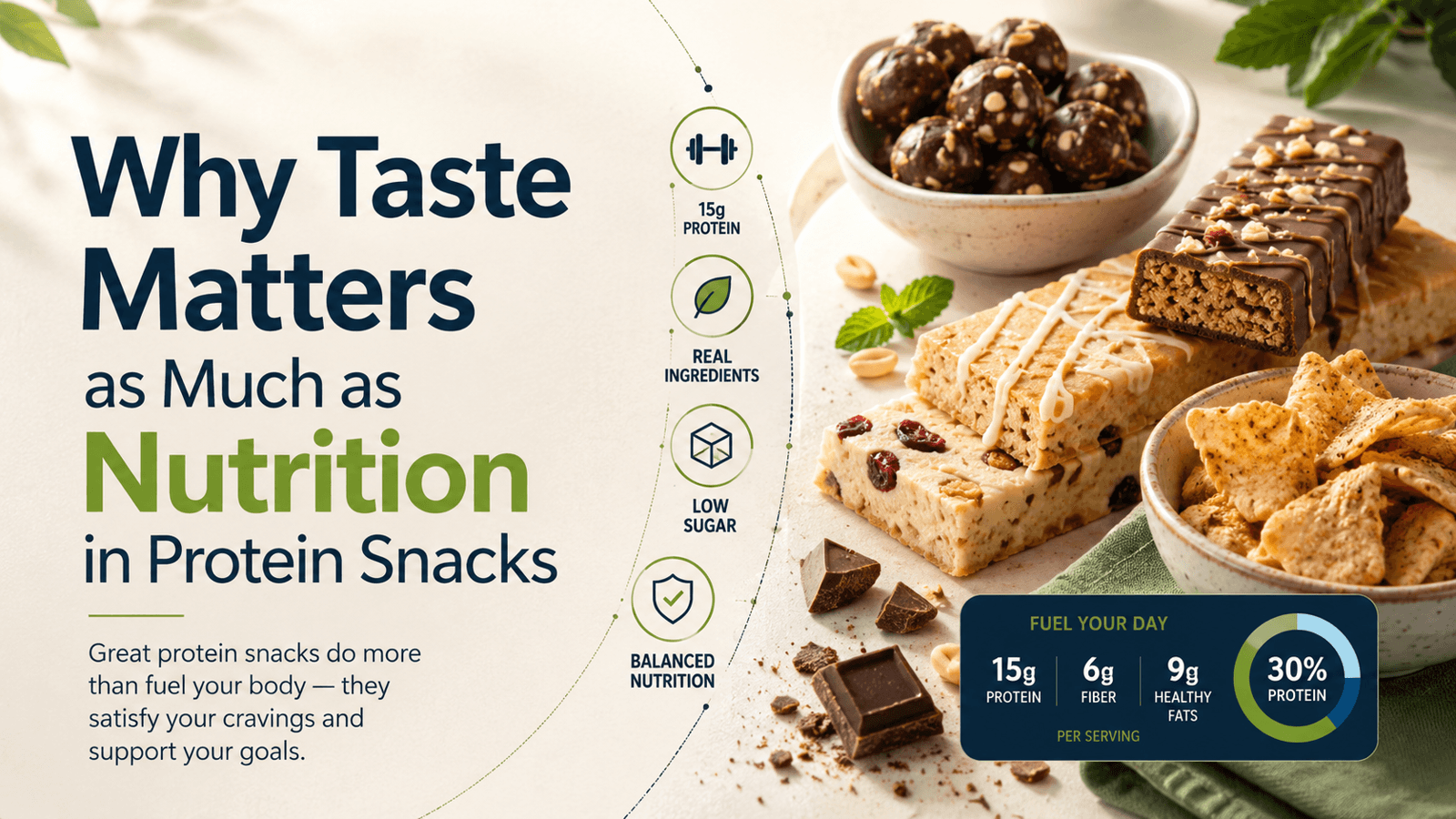
Why Taste Matters as Much as Nutrition in Protein Snacks

SwedeVital Authority Engine™
SwedeVital
In short
Taste is the decisive factor for repeat purchases in protein snacks; nutrition gets a product into consideration, but flavor, texture and finish keep it on shelves and drive sell‑through.
- In protein snacks, taste—not just nutrition—determines repeat sales and shelf performance.
The best tasting protein snacks are the ones shoppers buy twice. Nutrition earns the first purchase, but taste, texture and mouthfeel drive repeat rate, and repeat rate is what turns a listing into a category performer. For a buyer, taste is not a soft consumer preference. It is the single variable that most directly predicts sell-through, shelf retention and reorder velocity, which is why it deserves the same scrutiny you apply to macros, cost price and margin.
Why taste is a commercial metric, not a consumer luxury
It is tempting to treat flavour as the responsibility of the marketing team and nutrition as the domain of the buyer. In practice, the two are inseparable on the shelf. A protein snack with an excellent nutritional profile that tastes chalky, bitter or artificial will move once on novelty or promotion, then stall. The trial purchase happens; the second purchase does not. Because retail economics in this category depend heavily on repeat buyers rather than one-time trial, poor taste quietly erodes the numbers that matter most to you: units per store per week, waste from short-dated stock, and the reorder cadence that justifies the facings.
This is the commercial case for taking taste seriously. When you evaluate the best tasting protein snacks for a range, you are really evaluating which products will hold their space six months after the launch buzz fades. Nutrition gets a product into consideration. Taste keeps it on the planogram.
The taste-versus-nutrition trade-off buyers actually face
Every better-for-you snack sits somewhere on a spectrum between clean nutrition and indulgent flavour, and formulators are constantly negotiating that line. Understanding the trade-offs lets you interrogate a supplier's product rather than take the pack claims at face value.
Protein source shapes flavour before anything else
Different proteins carry different baseline tastes. Legume and pulse proteins, such as those in a protein lentil chip, bring earthy or slightly beany notes that need balancing with seasoning and roasting. Whey concentrates can taste creamy but may carry a dairy tang; isolates are cleaner but costlier. Plant blends can turn bitter if the inclusion rate is pushed too high. There is no free lunch: the more protein you force into a small format, the harder the formulator has to work to keep it pleasant. Ask suppliers how they mask or complement the base protein rather than whether they do.
Sugar, sweeteners and the aftertaste problem
Reducing sugar is a genuine consumer demand, but the substitutes carry their own baggage. High-intensity sweeteners can leave a lingering or metallic aftertaste that shoppers notice on the second bite even when the first is fine. Sugar alcohols improve mouthfeel but can cause digestive complaints at higher doses, which shows up later as negative reviews rather than at the point of sale. A credible supplier can explain the sweetening system and why it was chosen, not just point to a "no added sugar" flash on the front of pack.
Texture is half the eating experience
Buyers under-weight texture because it is harder to describe than flavour, yet it is where many protein snacks fail. Protein bars drift dense and claggy over shelf life as they lose moisture; baked protein bites can go dry; extruded or fried chips can end up hard rather than crisp. Texture also degrades over time, so a sample that impresses on day one may disappoint at the back of its life. Always taste near the end of the stated shelf window, not only fresh from the factory.
What separates the best tasting protein snacks on shelf
Across formats, the products that win repeat purchase tend to share a few characteristics. Use these as a qualitative screen when you cut samples.
- Recognisable flavour first, "protein" second. The eating experience should read as a genuinely enjoyable snack that happens to be high in protein, not a supplement pretending to be food.
- A clean finish. No lingering bitterness, no drying mouthfeel, no chemical aftertaste. The finish is where cheaper formulations reveal themselves.
- Texture that holds. Crispness or chew that survives the full shelf life and typical transport and storage conditions, not just a fresh sample.
- Portion-appropriate intensity. Seasoning and sweetness calibrated so the whole pack is pleasant to finish, which is what actually drives the next purchase.
- An ingredient list that reads honestly. Shoppers increasingly turn the pack over; a short, legible list supports both trust and taste perception.
From protein powder to finished snack: why format changes everything
The most searched entry point in this category is still protein powder, and it is worth understanding why buyers should not simply extrapolate from it. Powder is a flexible, high-dose format that consumers flavour and dilute themselves, which hides a lot of formulation sins behind milk, fruit or a strong shake flavour. A snack has nowhere to hide. The same protein that tastes acceptable blended into a smoothie can taste harsh in a bar, a bite or a chip, because there is no liquid, no ice and no added banana to round it off.
This matters commercially in two ways. First, a supplier's competence with protein powder does not guarantee competence with snacks; the sensory challenges are different. Second, shoppers who have graduated from tubs of powder to grab-and-go formats are often doing so precisely because they want convenience and taste without the ritual of mixing a drink. They are, in effect, a more demanding taste audience, not a less demanding one. The best tasting protein snacks are those built for the format from the start, rather than a powder recipe pressed into a bar mould.
A buyer's checklist for evaluating taste before you stock
Sensory evaluation should be as structured as your commercial review. A repeatable process protects you from being swayed by a single charismatic sample or a persuasive sales meeting.
- Blind-taste against the incumbent. Compare the candidate against whatever currently holds the space and against the category leader, with labels hidden, so branding does not bias the panel.
- Use more than one palate. Convene a small internal panel rather than relying on one buyer's preference; taste is variable and you are buying for a broad shopper base.
- Taste across the shelf life. Assess a fresh sample and one close to its expiry to judge how texture and flavour hold up.
- Eat a whole portion, not a nibble. Aftertaste, sweetness fatigue and texture problems only reveal themselves over a full serving.
- Check consistency between batches. Ask for samples from different production runs; a great one-off pilot batch is not the same as reliable manufacturing.
- Match flavour to your shopper, not your own preference. A flavour that suits a sports-nutrition audience may not suit a mainstream grocery shopper, and vice versa.
- Confirm the claim matches the taste. A product promising indulgence should genuinely satisfy; one promising "clean" should not taste of masking agents.
A simple rule of thumb: if your tasting panel would happily finish the pack and buy it with their own money, you have a repeat-purchase product. If they praise the macros but leave half the sample, you have a trial product that will not hold its facings.
Where nutrition still has to lead
None of this argues for chasing flavour at the expense of substance. The reason better-for-you snacks exist is that shoppers want a genuine nutritional reason to choose them over a conventional treat. Protein content that is meaningful rather than token, an ingredient list without unnecessary additives, and honest on-pack claims are the price of entry. Research broadly suggests that adequate protein intake may support satiety and the maintenance of muscle mass as part of a balanced diet, which is a large part of why the category resonates; that credibility collapses if the product is really a confection with a protein flash on the front. The goal is not taste or nutrition. It is a product that delivers a credible nutritional reason to buy and a taste experience good enough to buy again.
How to brief and pressure-test a supplier
Whether you are stocking a branded line or developing private label, the taste conversation should happen early. Ask a prospective partner to articulate the specific flavour and texture trade-offs in their formulation, how they have addressed the base protein's natural notes, and how the product performs at the end of shelf life. Request multi-batch samples and, for private-label work, involve their development team in an iterative tasting loop rather than signing off on a single prototype. A supplier that manufactures across formats, from protein lentil chips and protein bites to protein bars, should be able to explain why each format is flavoured and textured the way it is. SwedeVital develops its plant-based protein snack range with exactly these format-specific trade-offs in mind, and welcomes structured sensory evaluation as part of any stocking or private-label discussion. The suppliers worth partnering with treat your tasting panel as a feature, not a hurdle.
Related reading
- how buyers choose brands
- choosing private‑label protein chips
- low‑carb protein lentil chips
- healthy protein snacks
- private‑label protein snacks guide
Sources
- Gastrointestinal Disturbances Associated with the Consumption of Sugar Alcohols with Special Consideration of Xylitol: S
- From Sweetness to Mouthfeel: A Review on Overcoming Sensory Barriers in Sugar‐Free Beverages
- Why 61% of Americans Are Obsessed With Protein (And How Sellers Are Cashing In) — ShelfTrend
- Protein Snacks Market Size, Share & 2031 Trends Report
- Consumer Insights into “Clean Label” High-Fat, Low-Carbohydrate Protein Bars
- Development and evaluation of an alternative protein-rich legume-based snack
Frequently asked questions
Why is taste considered a commercial metric in protein snacks?+
Taste directly predicts sell‑through, shelf retention, and reorder velocity, making it as critical as macros, cost, and margin for repeat buyers.
How does protein source influence flavor in protein snacks?+
Different proteins bring distinct baseline tastes—legumes are earthy, whey can be creamy with a dairy tang, isolates are cleaner—requiring specific masking or complementing strategies.
What role do sweeteners play in protein snack flavor?+
High‑intensity sweeteners can leave lingering or metallic aftertastes, while sugar alcohols improve mouthfeel but may cause digestive complaints at higher doses, affecting long‑term perception.
Why is texture important for repeat purchases?+
Texture degrades over shelf life; a snack that stays crisp or chewy throughout its life maintains consumer satisfaction and encourages repeat buying.
How should buyers evaluate taste before stocking?+
Use a structured blind‑taste test against incumbents, assess flavor, finish, texture, portion intensity, and ingredient honesty to ensure the product is built for the format from the start.
See the full SwedeVital range
Every line, every format, and what it takes to stock them — sent to you now, before we open for orders on 1 January 2027.
Written by
SwedeVital Authority Engine™
Last updated
30 August 2026