Private Label Food Manufacturing: How to Build Retail-Ready Food Products Without Buying a Factory
4 June 2026·13 min read

Private Label Food Manufacturing: How to Build Retail-Ready Food Products Without Buying a Factory

AA

Aftab Ahmed

SwedeVital

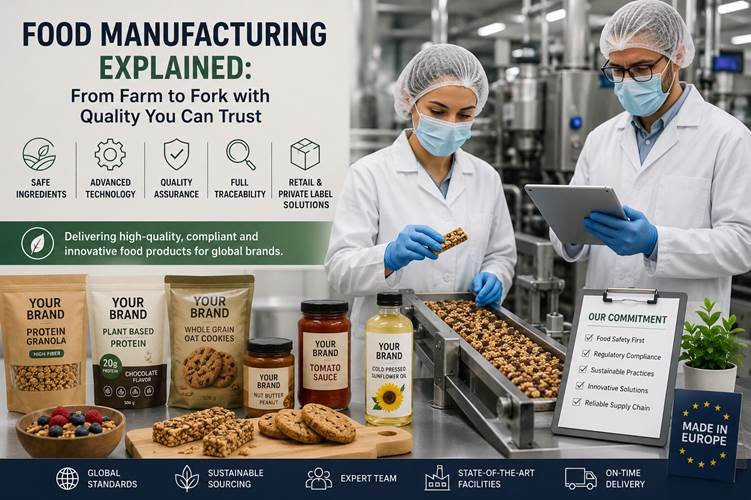
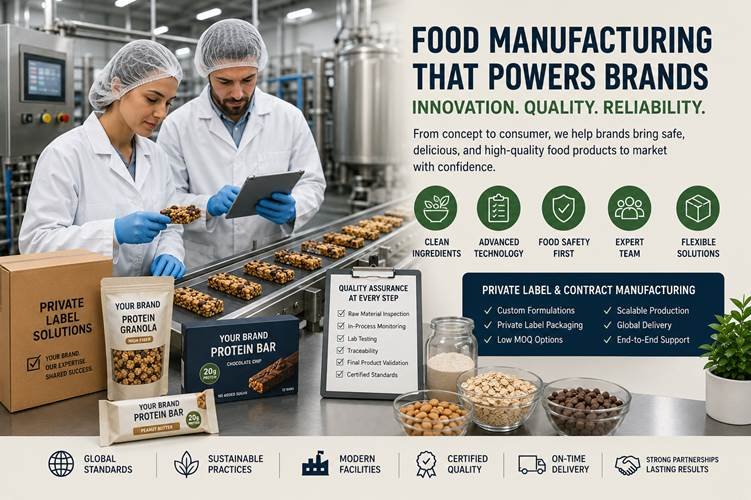
Figure 1. Private label food manufacturing works best when production, quality checks, and retail packaging are planned together.

Quick Answer

A private label food manufacturer produces food products for another company to sell under its own brand name. The best private label food manufacturing partner helps with formulation, ingredient sourcing, quality control, packaging, compliance, traceability, and retail-ready supply. For brands, retailers, and distributors, the goal is simple: get a safe, consistent, market-ready food product without building your own factory and accidentally becoming best friends with conveyor belts.

The small kitchen dream meets the factory reality

There is a very specific moment in every food brand journey when the founder looks at their product and thinks: “This could actually be bigger.” Maybe it started as a sauce recipe, a snack mix, a protein granola, a functional food idea, or a product that friends kept asking for after one too many polite “just a small batch” requests.

Then reality enters wearing a hairnet and holding a clipboard. Scaling food is not just “make more of it.” It is ingredients, shelf life, batch consistency, packaging, allergens, documentation, food manufacturing insurance, recalls, freight, inventory, and a wonderful little beast called compliance. Charming stuff. Very romantic. Like a candlelit dinner with an ERP system.

That is where private label food manufacturing and contract food manufacturing become useful. Instead of buying equipment, hiring a production team, managing food-grade flooring, sourcing a food conveyor belt manufacturer, and Googling food manufacturing pest control at 1:00 AM like life has taken an unexpected turn, brands work with manufacturers that already have the systems in place.

For a company like SwedeVital, this connects naturally to its wider B2B health and wellness positioning: European production, certified manufacturing, retail-ready supply, functional foods, protein snacks, and private label support for brands that want to launch without turning operations into a circus with spreadsheets.

What the top-ranking pages have in common

Current top pages around private label food manufacturing and contract food manufacturing mostly use a complete guide format. They explain what private label food is, why brands outsource, how the process works, what to ask manufacturers, how MOQs affect pricing, and why compliance matters. Many also compare private label, white label, co-manufacturing, and outsourced production.

That structure makes sense. A buyer researching a private label food manufacturer is not just looking for a definition. They are trying to avoid the kind of mistake that turns a product launch into a very expensive group project. So this article follows the same buyer-guide format, but with two extra angles many pages treat too lightly: digital traceability and retail-readiness.


Private Label vs Contract Manufacturing vs White Label

ModelWhat it meansBest forWatch-out
Private label food manufacturingA manufacturer produces food under your brand, often with packaging and formulation support.Retailers, distributors, wellness brands, and snack brands that want brand ownership.Needs a clear brief, realistic MOQ, and compliance planning.
Contract food manufacturingA manufacturer produces to your recipe, spec, or product brief.Brands that already know what they want and need production capacity.The relationship works only if specs and quality expectations are clear.
White label food productsA ready-made product is rebranded with limited customization.Fast market testing or simple launches.Lower differentiation; other brands may sell similar products.
Co-manufacturingBrand and manufacturer collaborate more deeply on production and sometimes product development.Scaling brands that need capacity, know-how, and process control.Contracts and ownership details need careful handling.


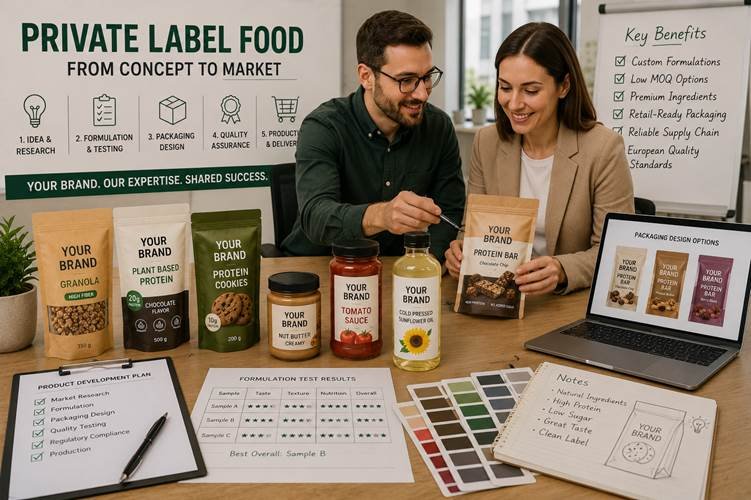
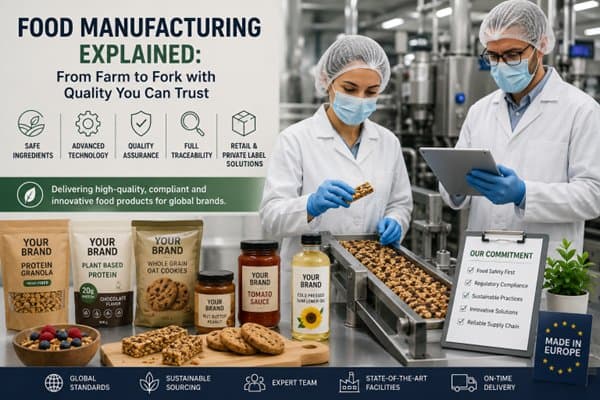
Figure 2. Product development for private label food products starts with a clear brief, realistic packaging, and a product people can actually explain.

Start with the product brief, not the packaging fantasy

I love a nice package mockup as much as the next person. A beautiful pouch can make a meeting feel like everyone suddenly knows what they are doing. But private label food production should not start with the label. It should start with the product brief.

A good brief explains the target customer, product format, nutrition goals, flavour direction, allergens, claim strategy, packaging requirements, shelf-life target, expected channels, and launch timeline. This matters whether you are speaking with private label snack food manufacturers, a functional food manufacturer, a vegan food sauce Thai manufacturer, a pet food ingredient manufacturer, or a contract food manufacturing partner for dry blends, sauces, bars, or beverages.

For SwedeVital-style buyers, the best product brief also connects the product to retail reality. Will it sit in supermarkets? Health stores? Gyms? Hotels? Cafes? Online marketplaces? The answer changes the packaging, price point, shelf life, carton setup, and even how much education the product needs on the front label.

Food manufacturing process: from idea to retail shelf

StageWhat happensBuyer questionWhy it matters
1. Product ideaDefine the product, category, buyer, and channel.Who is this for and why would they reorder it?Prevents pretty-but-pointless launches.
2. FormulationAdjust ingredients, nutrition, flavour, allergens, and texture.Can it taste good and still meet the claim?This is where good ideas become sellable products.
3. Pilot batchTest small production runs and gather feedback.Does the sample survive real-world expectations?Avoids full-scale regret. The worst flavour note is “oops.”
4. PackagingChoose materials, label layout, carton format, and barcode readiness.Is it shelf-ready and compliant?Retail buyers notice packaging problems quickly.
5. Quality controlCheck raw materials, process, finished product, and documentation.Can the manufacturer prove consistency?Protects the brand, retailer, and consumer.
6. DeliveryPlan pallets, freight, storage, and reorder cycles.Can supply keep up if the product works?Growth is fun until stock disappears.


What to check before choosing a food manufacturer

Choosing a food manufacturing company is a bit like choosing a housemate, except the housemate controls your product safety, delivery schedule, cost structure, and whether your retailer still takes your calls. So yes, maybe do more than glance at the website and hope the vibe is clean.

A serious partner should explain capabilities, product categories, certifications, minimum order quantities, quality systems, traceability, allergen controls, packaging options, lead times, and documentation. If you need food manufacturing software small business integration, food manufacturing inventory software exports, EDI benefits for food manufacturers, or food beverage manufacturing ERP compatibility, ask early. Nobody enjoys discovering “we cannot export that data” after the purchase order is already doing cartwheels.

For food and beverage manufacturing compliance software, the main point is simple: records should be organized enough that a product can be traced from raw material to finished batch. Traceability is not glamorous, but neither is a recall. It is one of those boring things that becomes extremely exciting when ignored.

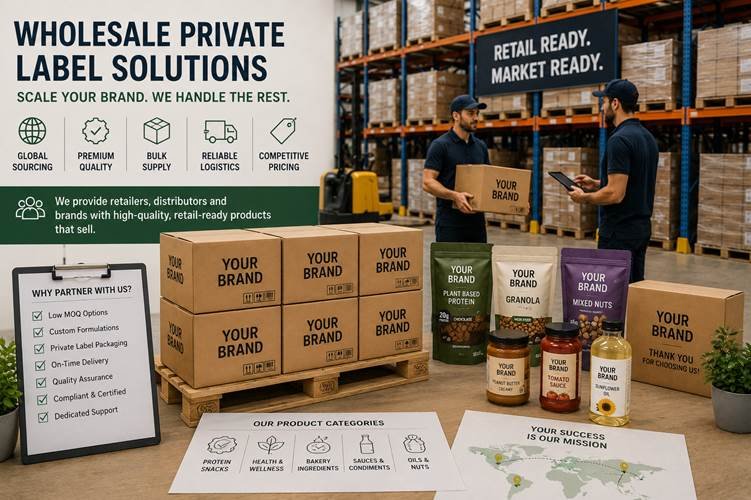
Figure 3. Wholesale private label products need more than a nice label. They need stock planning, logistics, and retail-ready delivery.

Wholesale private label products need warehouse logic

A product can be delicious and still fail if the supply chain is a mess. Wholesale private label products need cartons, pallets, lead times, reorder planning, freight coordination, storage conditions, and clear delivery terms. That is especially true for food manufacturers freight and logistics, wholesale food products Europe, and brands selling private label food products wholesale.

This is where SwedeVital’s Retail & Wholesale positioning matters. Its retail page is built around certified, shelf-ready products for retailers, distributors, and wholesale buyers, with EU-compliant labelling, barcode readiness, product catalogues, flexible MOQs, and distribution support. That is the kind of language buyers understand because it answers the question they are really asking: “Will this be easy to evaluate, order, and sell?”

If a manufacturer can produce but cannot support retail-ready supply, the buyer ends up doing hidden work. And hidden work is where margins quietly go to lie down.

Product categories where private label food manufacturing makes sense

Not every category needs the same type of manufacturer. Dry snacks, protein bars, sauces, oils, pet food, frozen food, beverages, bakery products, and functional food ingredients all need different equipment and controls. That is why searches like food manufacturers in Ohio, food manufacturers in NJ, food manufacturing companies in UAE, Vietnam frozen food manufacturers directory, and vegan Thai food sauce manufacturer show up in buyer research. People are not just looking for “a manufacturer.” They are looking for the right kind of production partner.

For SwedeVital, the closest natural fit is better-for-you food, functional foods, protein snacks, healthy snack products, private label snack food manufacturers, and retail-ready wellness formats. The site already frames the brand around European production, certified manufacturing, retail-ready supply, and private label support. That makes the food manufacturing topic useful without turning the article into a hard sales pitch.

Manufacturer evaluation checklist

QuestionGood answerWarning sign
Do they understand your category?They show relevant examples, equipment, and production limits.They say yes to everything faster than a toddler offered cake.
Can they support compliance?They explain certifications, documentation, labels, allergens, and testing.They treat compliance like a small decoration.
Can they scale?They discuss pilot runs, MOQ, reorder cycles, and capacity.They cannot explain what happens after the first order.
Do they support packaging?They can guide shelf-ready packaging, cartons, barcodes, and label requirements.You are left to figure out packaging alone.
Do they offer traceability?They maintain batch records, raw-material records, and recall-ready tracking.Their answer is “we have a spreadsheet somewhere.”


Figure 4. Contract food manufacturing turns a product idea into a controlled process: formulation, testing, packaging, production, and supply.

Quality control is not the boring chapter. It is the brand insurance policy.

Food manufacturing quality control software, environmental monitoring software for food manufacturers, food manufacturing traceability software, and quality control in food manufacturing all sound like phrases invented by people who enjoy dashboards. But they exist for a reason: food products have to be safe, consistent, and documented.

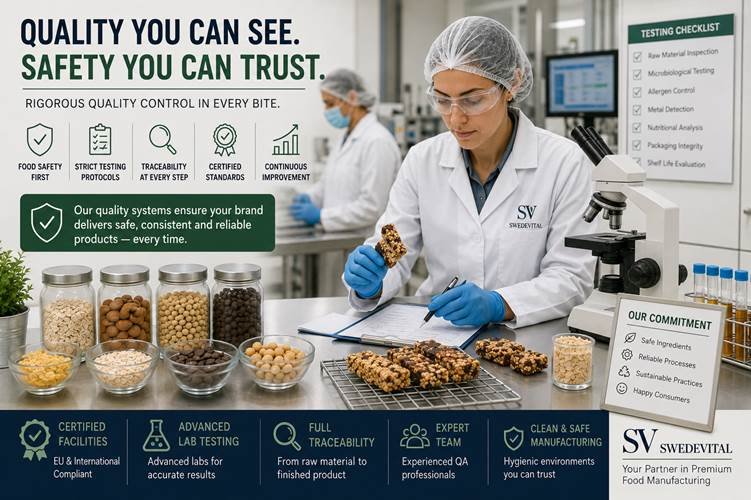
A good manufacturing partner should be able to explain raw material checks, in-process monitoring, allergen control, metal detection where relevant, packaging integrity, finished product testing, shelf-life controls, and recall readiness. The FAO describes traceability as a tool for controlling food hazards, supporting reliable product information, and enabling recalls when needed. In plain English: you should know where things came from and where they went.

This is also where insurance for food manufacturers, food and beverage manufacturing insurance, pet food manufacturing insurance, and affordable insurance for private-label products become part of the conversation. Insurance does not replace good manufacturing, but it belongs in the grown-up version of the launch plan.

Figure 5. Quality control, traceability, and testing are the unglamorous parts of food manufacturing that keep brands out of trouble.

Software, ERP, and the quiet heroics of not losing track of things

Food manufacturing management gets complicated quickly. Once a product moves beyond a small batch, brands start asking about food manufacturing production software, food manufacturing inventory software, food beverage manufacturing ERP, ERP for food manufacturing, EDI benefits for food and beverage manufacturers, food manufacturer codes, and traceability software for food manufacturing. Glamorous? Not exactly. Useful? Extremely.

For small brands, food manufacturing software small business tools can help manage inventory, recipes, lots, suppliers, orders, and quality records. For larger operations, food & beverage manufacturing ERP can connect purchasing, production, quality, warehouse, finance, and sales. Nobody writes poetry about ERP, but when the right batch ships on time, it deserves a polite little applause.

Brands evaluating private label food cosmetics manufacturing process partners, functional food ingredients manufacturer options, or contract food manufacturing suppliers should ask how production records, specifications, and shipping data are managed. If the system is clear, the relationship feels calmer. If the system is chaos wearing a password, run.

Two topics many guides miss

1. Recruitment and skill gaps

Food manufacturing recruitment, food manufacturing recruiters, food manufacturing executive recruiters, and recruitment agencies food manufacturing may not sound like buyer-facing topics, but they matter. A manufacturer with strong people, trained QA staff, experienced operators, and a stable production team is usually easier to trust than one held together by panic and laminated checklists.

2. Facility design and risk controls

Food manufacturing flooring, food manufacturer dust collector, wet scrubber for food manufacturing exhaust, environmental testing food manufacturing, pest control, and contractors experienced in building food-grade manufacturing facilities all affect production safety. These are not pretty brochure topics, but they are exactly the things that separate a clean operation from a future apology email.

How SwedeVital fits without forcing the pitch

The smartest way to introduce SwedeVital here is simple: the company already sits at the meeting point between private label, retail-ready food and wellness products, and European B2B supply. Its homepage highlights protein snacks, functional foods, wellness products, European production, certified manufacturing, and retail-ready supply. Its private label page speaks to formulation, packaging, compliance, and launch support. Its Retail & Wholesale page speaks to distributors, retailers, importers, and wholesale buyers.

That makes this article a natural bridge. A reader researching a private label food manufacturer may not be ready to book a call immediately. But after understanding product brief, formulation, packaging, compliance, quality control, traceability, logistics, and retail shelf-readiness, the next step is much clearer: review the Private Label page, compare the Retail & Wholesale option, and use the Blog to keep learning before making a supplier decision.

FAQ: Private Label Food Manufacturing

What is a private label food manufacturer?

A private label food manufacturer produces food products for another business to sell under its own brand name. The manufacturer usually supports production, quality control, packaging, and sometimes formulation.

What is the difference between private label and contract food manufacturing?

Private label usually focuses on selling under your own brand, often with packaging and product-development support. Contract food manufacturing is broader and can mean producing a product to a brand’s exact specification.

How do I choose the right private label food manufacturer?

Look for category experience, certification, realistic MOQs, quality-control systems, traceability, packaging support, lead-time clarity, and the ability to support retail or wholesale growth.

Why is traceability important in food manufacturing?

Traceability helps brands track raw materials, production batches, finished goods, and distribution. If there is a quality issue or recall, good traceability helps identify affected products quickly.

What software do food manufacturers use?

Food manufacturers may use ERP, inventory software, quality-control software, traceability software, EDI systems, and production planning tools to manage batches, stock, compliance, and orders.

What are common food manufacturing industry challenges in 2025?

Common challenges include ingredient costs, compliance pressure, traceability expectations, workforce shortages, retailer requirements, supply-chain delays, packaging changes, and demand for cleaner labels.

Can small brands use private label food manufacturing?

Yes. Many manufacturers support lower MOQs or pilot batches, but the right partner depends on the product category, packaging type, and launch goals.

Does SwedeVital support private label products?

SwedeVital presents a private-label pathway for brands that want custom recipes, branded packaging, EU label compliance, and retail-ready launch support across selected snack and wellness categories.

People Also Read

For more practical guides on retail-ready snacks, private label products, wellness sourcing, supplement manufacturing, and European distribution, explore the remaining blog content at SwedeVital’s Health & Wellness Blog.

Useful References Used for Direction

SwedeVital Retail & Wholesale