Low MOQ Private Label Supplements: How Retailers Test New SKUs Safely
6 July 2026·8 min read

Low MOQ Private Label Supplements: How Retailers Test New SKUs Safely

SA

SwedeVital Authority Engine™

SwedeVital

In short

Low MOQ private label supplements allow retailers to launch small pilot batches of new health products, reducing financial exposure and enabling data-driven decisions. This agile approach minimizes inventory risk, preserves cash flow, and supports rapid scaling of winning SKUs without the burden of large upfront commitments or long lead times.

  • Retailers use low MOQ private label supplements to safely test market demand for new health products before committing to large-scale production.

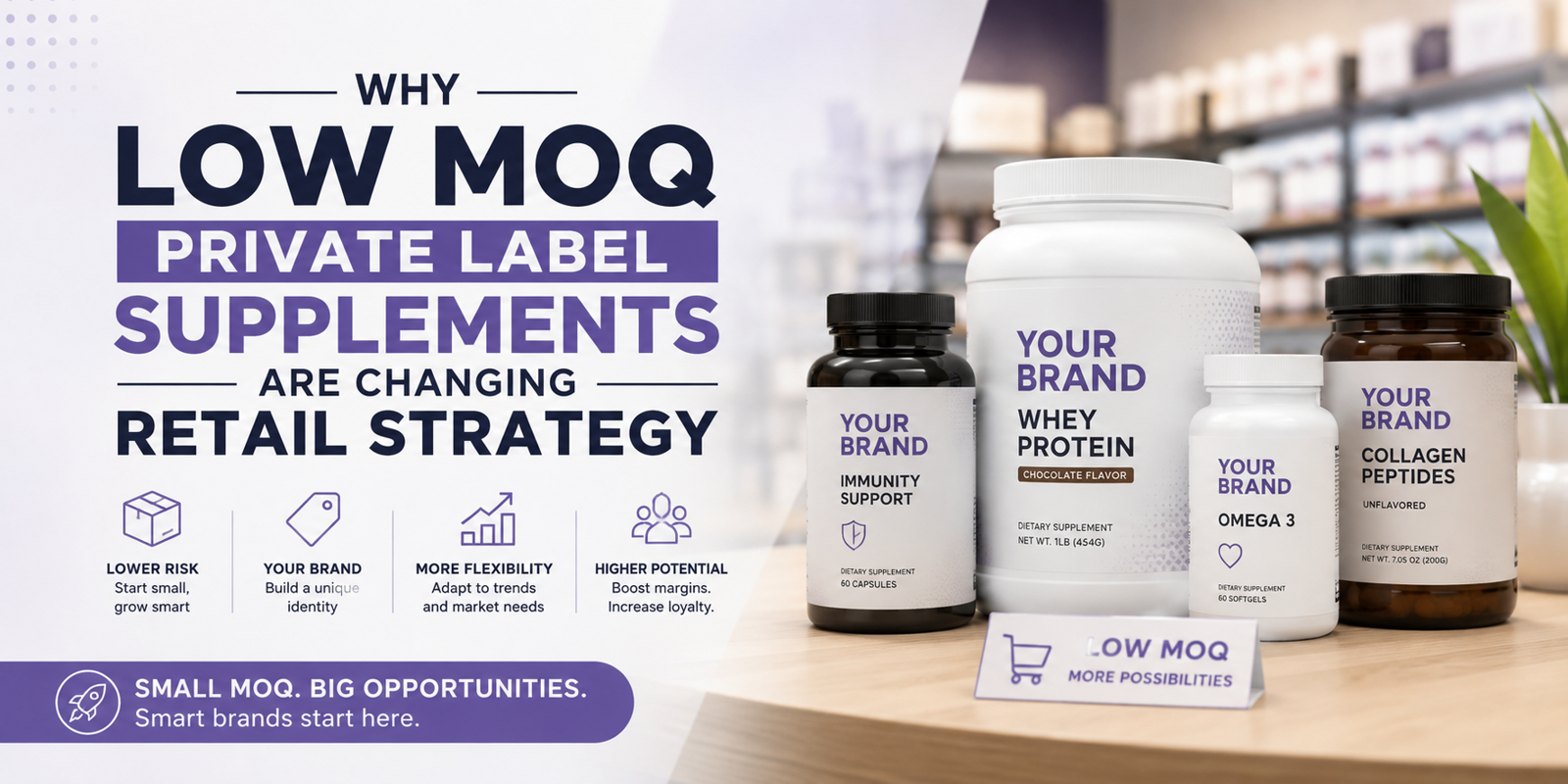
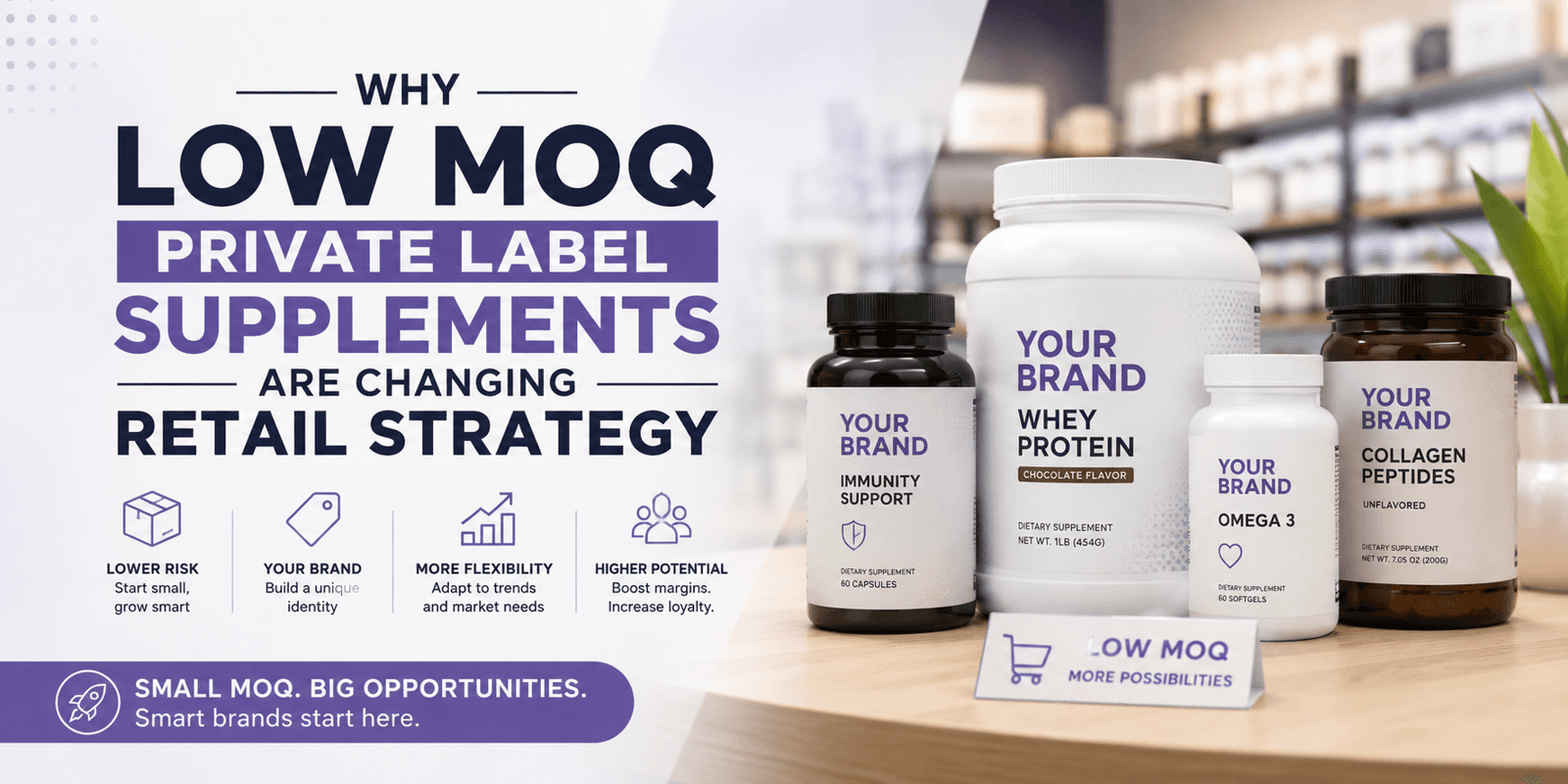
Why Low MOQ Private Label Supplements Are Changing Retail Strategy


For decades, the barrier to entry in the health and wellness sector was defined by massive capital requirements and rigid supply chain demands. Retailers and emerging brands were forced to commit to thousands of units before validating consumer interest, a high-stakes gamble that often resulted in dead stock or missed market windows. Today, that paradigm has shifted dramatically. The rise of low moq private label supplements has democratized product development, allowing retailers to test new health SKUs with unprecedented agility and minimal financial risk. This approach is no longer just a niche tactic for startups; it is becoming the standard operating procedure for modern retail buyers who need to respond quickly to shifting consumer trends without tying up warehouse space or capital in unproven inventory. The core advantage of this model lies in its flexibility. By partnering with manufacturers who offer reduced minimum order quantities, retailers can launch targeted collections—such as specific adaptogens, targeted collagen blends, or niche probiotic strains—to gauge market response. If a product resonates, the supply chain can scale up rapidly. If it does not, the financial loss is contained to a manageable pilot batch rather than a full production run. This iterative approach to inventory management aligns perfectly with modern retail strategies that prioritize speed-to-market and data-driven decision-making over long-term speculative planning. Furthermore, the European manufacturing landscape has evolved to support this demand for agility. With advanced production facilities capable of handling smaller batches without compromising on quality or regulatory compliance, retailers now have access to premium, certified products that were previously only available through large-scale industrial contracts. This accessibility allows even mid-sized retailers to compete with larger chains by offering unique, high-quality private label options that differentiate their shelves from generic competitors.

Reducing Financial Risk Through Agile Inventory Management

One of the most compelling arguments for adopting a low moq private label supplements strategy is the significant reduction in financial exposure. Traditional manufacturing models often require orders in the thousands or tens of thousands of units, locking retailers into long lead times and substantial upfront costs. In contrast, low MOQ manufacturers allow buyers to order smaller quantities, often starting with just a few hundred or thousand units. This lower threshold enables retailers to treat new product launches as experiments rather than commitments, preserving cash flow for marketing, logistics, and other critical operational areas. This financial prudence is particularly crucial in the volatile health supplement market, where consumer preferences can shift rapidly due to emerging scientific research, social media trends, or seasonal health concerns. By keeping initial orders small, retailers can monitor sales velocity, customer feedback, and return rates in real-time. This data provides invaluable insights that inform future purchasing decisions, allowing buyers to double down on winners and cut losses on underperformers before they become significant inventory burdens. Consequently, the overall inventory turnover rate improves, and the risk of obsolescence decreases. Additionally, the ability to order in smaller increments allows for more frequent product refreshes. Retailers can keep their shelves dynamic and exciting by rotating SKUs based on performance data rather than being stuck with a static lineup for months or years. This agility not only keeps the customer base engaged but also allows retailers to capitalize on trending ingredients before they become saturated in the market, giving them a first-mover advantage in their local or regional markets.

Validating Demand Before Scaling Production

The process of validating demand is critical for any new product launch, and low moq private label supplements provide the perfect testing ground for this validation. Retailers can introduce a limited run of a new supplement to a select group of stores or an online channel to measure consumer interest. This pilot phase allows buyers to assess not just sales figures, but also customer engagement, such as reviews, social media mentions, and repeat purchase rates. These qualitative metrics are often more predictive of long-term success than initial sales volume alone. For example, a retailer might test a new Marine Collagen Powder to see if their customers are responding well to beauty-from-within trends. By starting with a low MOQ, they can evaluate the product’s appeal without overcommitting resources. If the feedback is positive and sales are consistent, they can then negotiate with the manufacturer to increase the order size for subsequent batches. This step-by-step scaling process ensures that growth is sustainable and aligned with actual market demand, rather than speculative projections. This method also reduces the pressure on retail buyers to make perfect decisions upfront. Instead of relying solely on focus groups or historical data, which may not accurately predict future trends, buyers can let the market speak for itself. This evidence-based approach minimizes guesswork and increases the confidence in subsequent large-scale orders, leading to more profitable and successful product lines over time.

Accessing Premium European Manufacturing Standards

A common misconception is that lower order quantities come at the expense of quality. However, the current landscape of low moq private label supplements in Europe challenges this notion by offering access to some of the world’s most stringent manufacturing standards. European manufacturers are renowned for their adherence to rigorous regulatory frameworks, including GMP (Good Manufacturing Practice) and various organic certifications. These facilities are equipped to handle small-batch production with the same level of precision and care as large-scale operations, ensuring that every unit meets high purity and safety standards. Retailers can leverage this reputation to build trust with their customers. By sourcing private label supplements from certified European manufacturers, brands can highlight the quality and origin of their products on packaging and marketing materials. This transparency is increasingly important to health-conscious consumers who are scrutinizing ingredient sources and manufacturing processes more than ever before. The ability to offer premium, ethically sourced supplements at a competitive price point becomes a powerful differentiator in a crowded marketplace. Moreover, the proximity of European manufacturing to many key retail markets reduces shipping times and carbon footprints compared to sourcing from overseas. This logistical advantage not only improves supply chain resilience but also aligns with the growing consumer demand for sustainable and locally sourced products. Retailers can thus combine quality assurance with sustainability goals, enhancing their brand image while maintaining operational efficiency.

Strategic Product Selection for Pilot Launches

When selecting SKUs for a low MOQ pilot, retailers should focus on products that have clear market potential but are not yet oversaturated. Ingredients like Ashwagandha KSM-66 or Magnesium Glycinate offer strong health benefits with established consumer awareness, making them safer bets for initial testing. These products allow retailers to tap into existing demand while introducing their own brand identity through custom packaging and formulation tweaks. The goal is to find a balance between familiarity and novelty, ensuring that the product is recognizable enough to attract buyers but unique enough to stand out. Another strategic consideration is the format of the supplement. Powders, capsules, and softgels each have different shelf-life characteristics and consumer preferences. For instance, Marine Collagen Powder appeals to beauty and wellness enthusiasts, while Omega-3 Fish Oil targets heart health-conscious consumers. By diversifying the types of formats in a low MOQ test, retailers can gather data on which delivery methods resonate most with their specific customer base. This insight is invaluable for future product development and marketing strategies. It is also wise to consider complementary products that can be bundled or cross-promoted. For example, pairing a Probiotic 50B CFU with a Vitamin D3 supplement can create a comprehensive gut-health or immune-support bundle. Testing these combinations in small batches allows retailers to understand how customers perceive value in multi-product offerings, potentially increasing average order values and customer loyalty without significant additional risk.

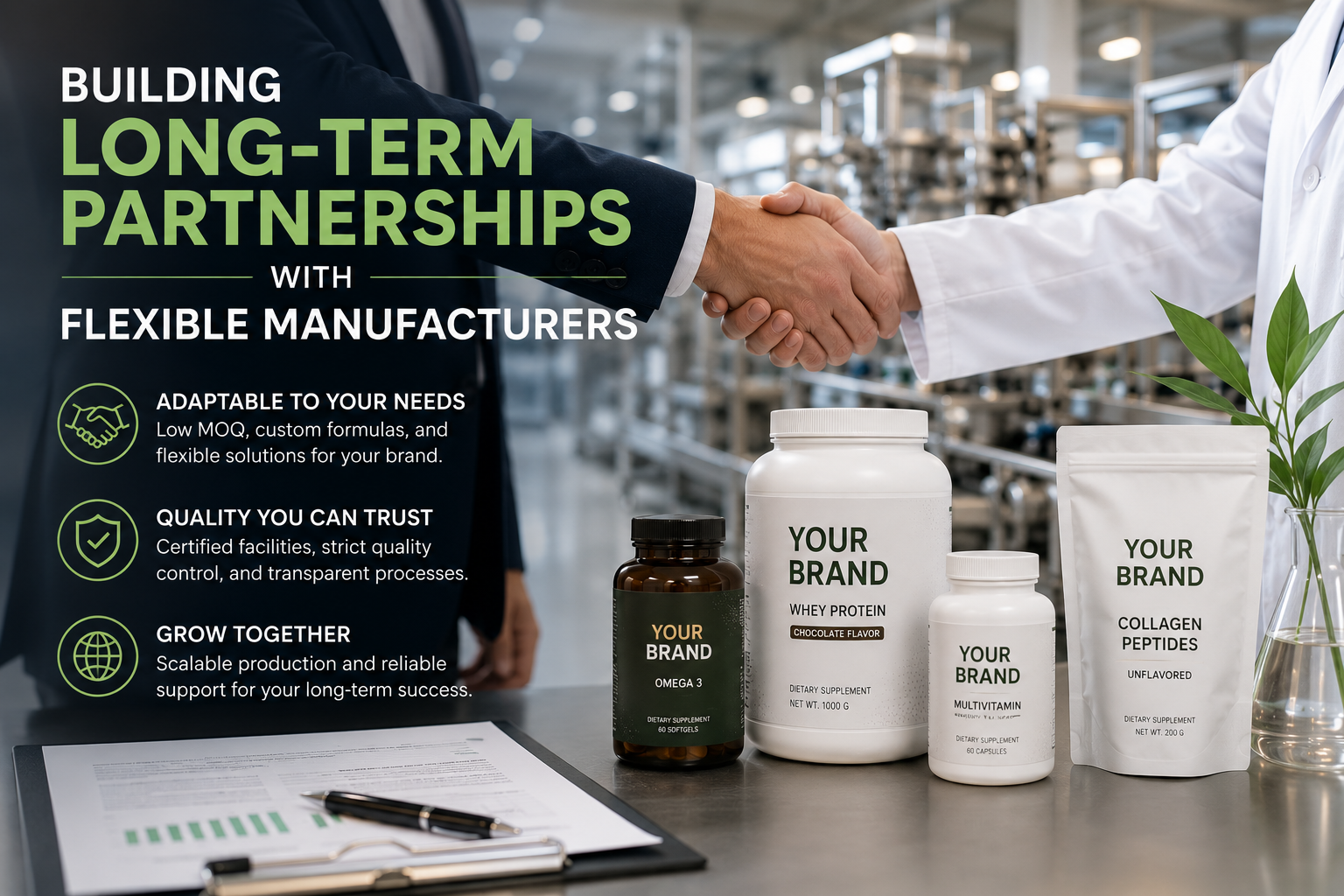
Building Long-Term Partnerships with Flexible Manufacturers

  
Success with low moq private label supplements depends heavily on finding the right manufacturing partner. Retailers should look for manufacturers who prioritize collaboration and innovation, offering not just production but also strategic support in formulation and market trends. A good partner will be transparent about lead times, costs, and quality control processes, fostering a relationship built on trust and mutual growth. This partnership model allows retailers to scale seamlessly from pilot batches to full-scale production as demand grows, without the friction of switching suppliers. Additionally, manufacturers who offer complete packaging and branding support can significantly reduce the time-to-market for new products. By handling everything from label design compliance to final product assembly, these partners enable retailers to focus on sales and marketing rather than logistical complexities. This end-to-end service is particularly valuable for retailers entering the supplement space for the first time, as it simplifies the complex regulatory and operational landscape of private label manufacturing. As the market continues to evolve, the ability to adapt quickly will be a key competitive advantage. Retailers who embrace low MOQ strategies and build strong relationships with flexible manufacturers will be better positioned to meet consumer demands, manage risks, and drive growth in the dynamic health supplement industry. By starting small and scaling smart, they can create sustainable, high-quality product lines that resonate with customers and stand the test of time. For retailers looking to explore these opportunities further, understanding the broader landscape of private label options is essential. You might also find value in exploring A Comprehensive Guide to Private-Label Protein Snacks in Europe to see how snack categories are adopting similar agile strategies. Additionally, learning about Beyond the Vitamin Aisle: How Retail Buyers Can Build a Health Supplement Shelf People Trust can provide crucial insights into presentation and consumer trust. For those interested in cross-category testing, The Low-MOQ Snack Test: How Protein Crisps Help Retailers Validate Demand Before a Full Private Label Launch offers a parallel case study in snack validation. Finally, consider reviewing European Snacks for Retail: How to Build a Shelf That Feels Imported, Interesting, and Actually Sellable for broader retail strategy tips.

Related: supplement manufacturing partners

Related reading

Frequently asked questions

What is the primary advantage of using low MOQ private label supplements for retailers?+

The main advantage is the ability to test new health SKUs with minimal financial risk, allowing retailers to validate consumer interest before committing to large production runs.

How do low MOQ orders impact inventory management for retail buyers?+

Low MOQ orders enable agile inventory management by treating launches as experiments, improving turnover rates and reducing the risk of obsolescence through real-time sales monitoring.

Why is this strategy becoming standard for modern retail buyers?+

It aligns with modern strategies prioritizing speed-to-market and data-driven decisions, allowing quick responses to shifting consumer trends without tying up capital in unproven inventory.

How does the European manufacturing landscape support low MOQ strategies?+

Advanced facilities can handle smaller batches without compromising quality or regulatory compliance, providing access to premium products previously only available through large-scale contracts.

Pre-launch · Opening 1 January 2027

Be first to stock SwedeVital

Join the waiting list for priority partner onboarding, the full catalogue and launch pricing — before anyone else.

No spam. Just first access.

Written by

SwedeVital Authority Engine™

Last updated

7 July 2026

Low MOQ Private Label Supplements for Retailers — SwedeVital