
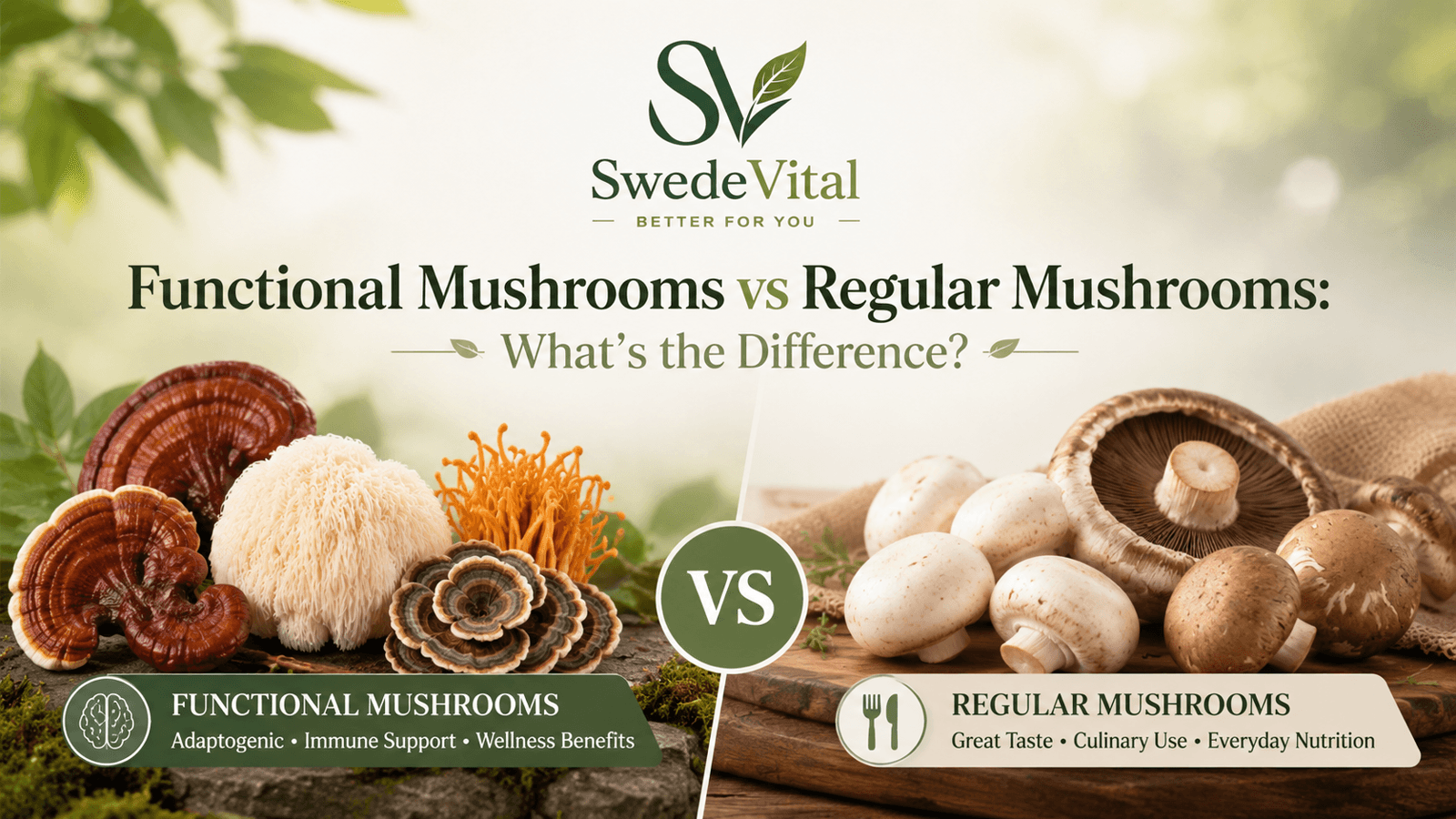
Functional Mushrooms vs Regular Mushrooms: What's the Difference?

SwedeVital Authority Engine™
SwedeVital
In short
Functional mushrooms are species chosen for their concentrated bioactive compounds, processed into supplements for targeted wellness benefits, whereas regular mushrooms are grown primarily for culinary use and general nutrition.
- Functional mushrooms are processed for concentrated wellness compounds, while regular mushrooms are grown for food and general nutrition.
The short answer
The real distinction in functional mushrooms vs regular mushrooms is purpose. Regular (culinary) mushrooms — button, cremini, portobello, oyster and shiitake — are grown to be eaten as food, prized for flavour, texture and everyday nutrition. Functional mushrooms are a narrower group of species, such as Lion's Mane, Reishi, Cordyceps and Turkey Tail, that are concentrated into supplements — capsules, dual-extract sprays and gummies — for their naturally occurring compounds, and have traditionally been used to support wellbeing. Every edible mushroom has a nutritional profile; only functional mushrooms are positioned around specific, evidence-led wellness uses.
For a retail buyer, that difference decides where a product sits: fresh produce and grocery, or the supplement and functional-wellness aisle. This primer explains the botany, the compounds, the formats and what to check before you list.
What counts as a “regular” mushroom?
Regular mushrooms are the culinary varieties your customers already cook with. The white button, cremini and portobello are all the same species (Agaricus bisporus) at different stages of maturity. Beyond that sit shiitake, enoki, chestnut, chanterelle, and one of the most-searched of all — oyster mushrooms.
Oyster mushrooms (Pleurotus ostreatus and relatives) are worth calling out because shopper interest in them is high and rising. They grow in fan-shaped clusters, cook quickly, and have a mild, savoury taste that suits plant-forward cooking, which is part of why demand keeps climbing. Nutritionally, culinary mushrooms are generally low in calories and fat, contribute fibre, B vitamins and minerals, and — when exposed to light — can be a source of vitamin D. They are eaten in meal-sized portions and treated, correctly, as food.
Interestingly, several species blur the line. Shiitake and oyster mushrooms are everyday ingredients and subjects of research into their compounds. That overlap is exactly why the “functional” label is about how a mushroom is prepared and used, not a rigid list of species.
What makes a mushroom “functional”?
A functional mushroom is one selected and processed for its bioactive compounds rather than its culinary qualities. The headline compounds are beta-glucans — a family of polysaccharides found in the fungal cell wall that have been studied for their interaction with the immune system — alongside species-specific molecules such as the hericenones and erinacines associated with Lion's Mane, or the triterpenes associated with Reishi.
The catch is concentration. You would need to eat an impractical amount of the raw mushroom to consume a meaningful dose of these compounds, and many are locked inside indigestible chitin or are poorly water-soluble. That is why functional mushrooms reach the shelf as extracts and supplements: the processing is what unlocks and concentrates the active fraction. In short, a culinary mushroom is defined by the plate; a functional mushroom is defined by its extract and its intended use.
Functional mushrooms vs regular mushrooms: the core differences
Set side by side, the contrast is easy to summarise:
- Primary purpose: culinary mushrooms are food for taste and nutrition; functional mushrooms are supplements taken for targeted, traditionally-associated wellness uses.
- Form on shelf: fresh, dried or frozen produce versus capsules, powders, dual-extract sprays and gummies.
- Dose and portion: a culinary mushroom is eaten by the handful; a functional dose is measured in grams or millilitres of a concentrated extract.
- Key metric: for food it is freshness and flavour; for a functional product it is the standardised, disclosed level of active compounds such as beta-glucans.
- Regulatory frame: culinary mushrooms are food; functional mushroom supplements sit under EU food-supplement rules, which strictly govern what may be claimed.
Neither category is “better” — they answer different shopper needs. A category manager may well stock both, in different parts of the store.
The functional species retailers ask about most
Four species dominate the functional-wellness conversation. The language below is deliberately non-committal, because that is what EU rules require for food supplements.
Lion's Mane (Hericium erinaceus)
A white, cascading mushroom that is also edible when fresh. As a supplement it has been studied for its potential role in cognition and nervous-system support, and is traditionally taken as a “focus” mushroom. Research is ongoing rather than settled.
Reishi (Ganoderma lucidum)
Too woody to eat, Reishi has been used for centuries in traditional practice and is often associated with calm and rest. It has been studied for immune-modulating and stress-related effects; its bitterness is a signature of the triterpenes it contains.
Cordyceps (Cordyceps militaris and relatives)
Traditionally used to support stamina and energy, Cordyceps is popular with active consumers. Research has looked at exercise performance and endurance, though findings remain preliminary.
Turkey Tail (Trametes versicolor)
Named for its banded, fan-like shape, Turkey Tail is one of the most-researched mushrooms for its beta-glucan content and has been studied for immune support. It is not eaten as food but is valued purely for its extract.
Regulatory note: for any functional mushroom, keep claims evidence-led. Phrases such as “traditionally used for”, “has been studied for” or “may support” are appropriate; statements that a product treats, prevents or cures disease are not permitted for food supplements in the EU.
Format matters: capsules, dual-extract sprays and gummies
Because the actives are concentrated and sometimes hard to absorb, how a functional mushroom is delivered changes what the customer actually gets.
- Capsules and powders suit shoppers who want a straightforward daily routine and precise, repeatable servings.
- Dual-extract sprays use both hot-water and alcohol extraction. That matters because water pulls out the beta-glucans while alcohol pulls out the triterpenes and other alcohol-soluble compounds — a single method captures only part of the profile. Sprays also offer fast, on-the-go dosing.
- Gummies lower the barrier for newcomers and mask the bitterness of species like Reishi, trading some potency and label transparency for palatability.
SwedeVital's functional-wellness line spans these formats — Lion's Mane, Reishi, Cordyceps and Turkey Tail as capsules, dual-extract sprays and gummies, alongside creatine and magnesium sleep gummies — which lets a retailer serve both the committed user and the curious first-timer from one supplier.
A buyer's checklist for functional mushrooms vs regular mushrooms
When you are assessing a functional range rather than fresh produce, the quality signals are different. Run through this before you list:
- Fruiting body vs mycelium: ask which part is used. Fruiting-body extracts and grain-grown mycelium products can differ substantially in compound content; you want it stated, not implied.
- Beta-glucan disclosure: look for the actual beta-glucan level, ideally measured, rather than a vague “polysaccharide” percentage that can include starch from a growing substrate.
- Extraction method: for species where both water- and alcohol-soluble compounds matter, dual extraction is the more complete approach.
- Third-party testing: confirm testing for contaminants such as heavy metals, and for the actives claimed on the label.
- Compliant labelling: claims should be evidence-led and non-committal; check the wording travels safely across the EU markets you sell into.
- Traceability and format range: a supplier who can offer capsules, sprays and gummies from documented sourcing gives you flexibility as demand shifts.
For culinary mushrooms the checklist is simpler and food-led: freshness, cold-chain, shelf life, grade and consistent sizing.
Where each belongs in a retail range
Culinary mushrooms, oyster mushrooms included, sell on volume and repeat purchase through produce and grocery. Functional mushrooms sell on trust and education through the supplement and wellness aisle, often at higher margin and with a more informed shopper who reads the label. Many retailers now run both, using the visibility of everyday mushrooms to warm customers up to the functional range.
The practical takeaway on functional mushrooms vs regular mushrooms: treat them as two categories with two buying disciplines. Judge food on freshness and flavour, and judge supplements on disclosed actives, extraction quality and compliant, honest claims.
Frequently asked questions
Are functional mushrooms just regular mushrooms in a pill?
Not exactly. Some functional species, like Lion's Mane and oyster mushrooms, are edible, but the supplement is a concentrated extract designed to deliver a meaningful dose of compounds you could not practically get from eating the mushroom. Others, such as Reishi and Turkey Tail, are too woody to eat and exist only as extracts.
Are oyster mushrooms a functional mushroom?
Oyster mushrooms are primarily a culinary mushroom, valued for taste and versatility. Their compounds have been studied, so they sit near the line, but on shelf they are sold and used as food rather than as a functional supplement.
What are beta-glucans and why do buyers care?
Beta-glucans are polysaccharides in the fungal cell wall that have been studied for their interaction with the immune system. For functional products they are a key quality marker, which is why a disclosed, measured beta-glucan level is more meaningful than a generic polysaccharide figure.
Why does “dual extraction” matter?
Different actives dissolve in different solvents: water releases beta-glucans while alcohol releases triterpenes and other alcohol-soluble compounds. Dual extraction uses both, so the finished product reflects more of the mushroom's full profile than a single-method extract.
Can we make health claims on functional mushroom products?
In the EU, food supplements may not claim to treat, prevent or cure disease. Keep wording evidence-led and non-committal — “traditionally used for”, “has been studied for”, “may support” — and check each claim against the market you are selling into.
Should a retailer stock both?
Often yes. Culinary mushrooms drive volume and repeat purchase in produce, while functional mushrooms add a higher-margin, education-led line in the wellness aisle. They serve different needs and can reinforce each other in-store.
Related reading
Frequently asked questions
What makes a mushroom functional?+
A functional mushroom is selected and processed for its bioactive compounds, such as beta‑glucans, hericenones, or triterpenes, and is typically sold as a concentrated supplement rather than fresh produce.
Which species are most common in functional mushroom supplements?+
The most common functional species are Lion's Mane, Reishi, Cordyceps, and Turkey Tail, each known for specific wellness benefits like cognition, immune support, stamina, and calm.
How do you identify a quality functional mushroom supplement?+
Look for standardized, disclosed levels of active compounds (e.g., beta‑glucan content), evidence‑led claims, and reputable extraction methods such as dual‑extract sprays or capsules.
Can I eat regular mushrooms for the same health benefits as functional ones?+
While regular mushrooms contain nutrients, you would need impractically large amounts to reach the concentrated doses of bioactive compounds found in functional mushroom supplements.
What regulatory rules apply to functional mushroom supplements?+
In the EU, functional mushroom supplements are governed by food‑supplement rules, allowing only evidence‑led claims and prohibiting disease treatment or cure statements.
See the full SwedeVital range
Every line, every format, and what it takes to stock them — sent to you now, before we open for orders on 1 January 2027.
Written by
SwedeVital Authority Engine™
Last updated
2 September 2026